


 Free US Calls: 1-888-433-4735
 International: 305-545-5588
3 Reasons Your Twin Disc Transmission Clutch Plates Are Making Noise — And How Diesel Pro Power Can Help
A Twin Disc marine transmission is engineered to deliver smooth, reliable shifting under heavy load. Whether you’re running a tugboat, fishing vessel, workboat, pleasure craft, or commercial fleet, the clutch system inside your transmission is responsible for transferring engine power into forward and reverse thrust.
But when that system begins making noise — clattering, rattling, grinding, or knocking — it’s a sign that something inside the clutch assembly is wearing out or failing. Noise from a Twin Disc clutch system is never normal, and it never fixes itself. It’s a warning signal that requires attention.
In most cases, clutch-related noise comes down to three major culprits:
- Worn splines between the reverse-driving and driving gears and clutch shafts
- Bearing failure inside the transmission
- Damaged or deteriorated rubber blocks
Understanding these issues early can help prevent major failures, expensive downtime, and unnecessary damage to your engine and gear. Diesel Pro Power supplies all the components needed to fix these issues — making it easy, fast, and reliable to get your transmission back into perfect working condition.
Here is a detailed breakdown of each cause and why it matters.
See Our Catalog Of Parts For Twin Disc Transmissions
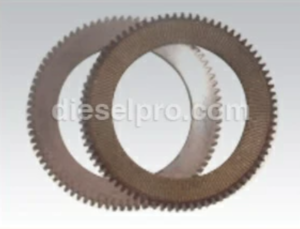
Clutch plate for Twin Disc marine gear MG502
1. Worn Splines Between Reverse-Driving & Driving Gears and the Clutch Shafts
This is the most common cause of noise coming from Twin Disc transmission clutch plates — especially in older vessels, high-torque applications, and transmissions that operate under frequent shifting or heavy load.
What Are Splines and Why Are They Important?
Splines are the ridges or teeth that:
- Align the clutch plates on the shaft
- Transfer torque smoothly
- Prevent rotational slippage
- Maintain consistent gear engagement
In Twin Disc marine gears — especially popular models on Detroit Diesel, Cummins, Caterpillar, and John Deere marine engines — the splines ensure that the clutch plates and shafts rotate as a single unit with proper timing.
What Happens When Splines Wear Out?
Over thousands of hours, especially when running high-torque engines or frequent docking maneuvers, splines begin to:
- Round off
- Develop backlash
- Lose surface hardness
- Become misaligned
- Slip under acceleration
As the clearance between splines increases, the clutch plates begin to clatter or rattle, especially at:
- Idle
- Low RPM
- Shifting into gear
- Deceleration
You may hear:
- Metallic clicking
- Sharp knocking
- Rhythmic rattling
- Vibration through the gear housing
This is a sign that the clutch plates are no longer locking tightly onto the shafts, and the clearance is allowing them to move independently.
If You Ignore It…
Worn splines quickly damage:
- Gear teeth
- Clutch plate hubs
- Input shafts
- Reverse gear components
- Bearings (due to vibrational resonance)
The noise is not just annoying — it signals a mechanical failure in progress.
Solution: Replace the Worn Splines, Clutch Shafts, or Clutch Components
Diesel Pro Power carries:
- Replacement clutch shafts
- Reverse-driving gear components
- Driving gear splined hubs
- Clutch plates
- Full Twin Disc rebuild components
You can restore proper engagement and eliminate noise with correctly fitted, OEM-quality parts.
2. Bearing Failure Inside the Transmission
Another extremely common source of noise in Twin Disc transmissions is failing or damaged bearings. Bearings support rotating shafts and gears, keeping everything aligned and at the proper clearance.
Symptoms of Bearing Wear or Failure
When bearings fail, you may hear:
- Grinding
- Low-frequency rumbling
- Growling noises under load
- Whining at higher RPM
- Knocking as gears move off-center
The noise often changes depending on RPM and load — a clear sign that a rotating internal component is no longer properly supported.
Why Bearings Fail
Marine transmissions operate in harsh conditions:
- High RPM and heavy torque
- Warm and humid engine rooms
- Salt exposure
- Contaminated or low-quality gear oil
- Long idle periods
- Shock loads during abrupt shifting
Over time, bearings develop:
- Pitting
- Heat scoring
- Metal flaking
- Loosened clearances
- Raceway damage
Once this happens, the shaft they support begins to wobble or vibrate inside the case, creating audible noise and damaging nearby components.
Consequences of Continued Operation
Ignoring bearing noise can lead to:
- Shaft misalignment
- Accelerated spline wear
- Clutch plate destruction
- Gear tooth damage
- Catastrophic transmission failure
A failed bearing can take out an entire gear set, turning a small repair into a costly rebuild.
Solution: Replace the Bearings Before They Destroy Other Parts
Diesel Pro Power supplies:
- Input shaft bearings
- Output shaft bearings
- Clutch pack bearings
- Roller and ball bearings for Twin Disc units
- Full bearing sets for complete transmission rebuilds
Replacing bearings early eliminates noise, restores alignment, and protects the rest of the transmission from multi-part failure.
3. Damaged or Deteriorated Rubber Blocks (Drive Dampers)
Rubber blocks — often called drive dampers, torsional blocks, or flexible coupler elements — are another common cause of noise in Twin Disc transmissions. These rubber elements sit between the engine flywheel and the transmission input shaft, absorbing vibration and shock.
Why Rubber Blocks Matter
Rubber dampers:
- Smooth out shifting
- Absorb torsional vibration
- Protect splines and shafts
- Reduce noise and harshness
- Prevent shock loads from hitting gears
- Extend clutch component life
Without them, the mechanical shock from the diesel engine would transfer directly into the gear.
How Rubber Blocks Wear Out
Marine conditions degrade rubber quickly:
- Heat
- Oil or diesel contamination
- Salt exposure
- Constant torsional load
- Age
- Dry rot
- Hardening or cracking
Over time, the rubber becomes brittle or begins to separate from its metal housings.
Symptoms of Damaged Rubber Blocks
When the dampers begin failing, you may hear:
- Thumping or knocking during gear engagement
- Clattering when accelerating
- Shaking or vibration at idle
- Metallic impact sounds inside the bell housing
- Irregular transmission noise
These noises come from the rubber no longer cushioning the impact between the engine and the transmission.
What Happens If You Ignore It
Bad dampers lead to:
- Accelerated spline wear
- Cracked flywheels
- Shaft misalignment
- Tooth wear on clutch gears
- Harsh shifting
- Internal clutch damage
Replacing damaged rubber blocks early is far cheaper than repairing the damage they create.
Solution: Install New Dampers, Rubber Blocks, or Couplers
Diesel Pro Power carries:
- Rubber block kits
- Damper plates
- Flexible couplers
- Transmission mounting components
- OEM-grade replacement parts
Restoring the shock-absorbing system eliminates noise and preserves drivetrain health.
Diesel Pro Power Has Every Part You Need to Fix Transmission Clutch Noise
Whatever is causing the noise in your Twin Disc transmission, Diesel Pro Power stocks the components you need:
- Splined clutch shafts and gears
- Replacement clutch plates
- Bearings and full bearing kits
- Rubber blocks and damper components
- Transmission rebuild parts
- Gaskets, seals, and hardware
- Support for Detroit Diesel, Caterpillar, Cummins & John Deere marine power
With 40,000+ customers, shipping to 180+ countries, and a 4.9-star rating on Google, Diesel Pro Power is the trusted source for keeping your drivetrain quiet, smooth, and reliable.
Conclusion
Clutch plate noise in a Twin Disc transmission is a warning — not a nuisance. Whether it’s worn splines, failing bearings, or deteriorated rubber blocks, the root cause must be repaired quickly before it leads to serious damage or downtime.
Diesel Pro Power supplies all the parts required to fix the problem professionally and permanently.
See Our Catalog Of Parts For Twin Disc Transmissions