


 Free US Calls: 1-888-433-4735
 International: 305-545-5588
Introduction: What is a Cummins Engine and How Does it Work?
What Is a Cummins Engine?
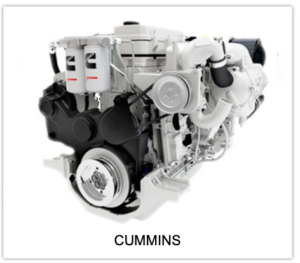
A Cummins engine is a high-performance diesel engine designed and manufactured by Cummins Inc., a company that began in Columbus, Indiana and has grown into one of the world’s leading producers of diesel power systems. Known for their durability, efficiency, and long service life, Cummins engines are built to deliver consistent power in demanding environments. Their advanced engineering, strong torque output, and dependable cooling and fuel systems make them a trusted choice for operators who require reliability above all else.
Marine Applications of Cummins Engines
Cummins engines are especially well-regarded in the marine industry, where performance and reliability directly impact safety and vessel uptime. These engines are purpose-built or specifically adapted to withstand the harsh conditions of marine environments, including saltwater exposure, continuous load demands, and long operating hours.
In commercial marine settings, Cummins engines power fishing vessels, tugboats, push boats, ferries, dive boats, pilot boats, and offshore support vessels. Their strong low-end torque makes them ideal for heavy-duty tasks such as maneuvering, towing, and running auxiliary marine systems.
In the recreational marine sector, Cummins engines are frequently used in yachts, trawlers, sportfishing boats, and high-end pleasure craft. Boaters value them for their smooth power delivery, efficient fuel burn, and long-term reliability during extended voyages.
Whether for work or leisure, Cummins engines are engineered to keep vessels operating safely and efficiently on the water, reinforcing their reputation as some of the most trusted powerplants in the marine world.
How Does a Cummins Engine Work?
The Basic Diesel Combustion Cycle
Cummins engines are internal combustion diesel engines designed to transform the chemical energy of fuel into powerful mechanical output. They operate on the four-stroke combustion cycle—intake, compression, power, and exhaust—an efficient and reliable process that has made diesel engines the standard for heavy-duty and marine applications.
Air Intake and Compression
The process begins as the engine draws clean, filtered air into the combustion chamber through the intake system. Unlike gasoline engines, Cummins diesel engines do not use spark plugs. Instead, they rely on extremely high compression ratios. As the piston rises during the compression stroke, the air becomes highly pressurized and its temperature climbs dramatically, reaching the point where fuel can ignite on contact.
High-Pressure Fuel Injection
Next, diesel fuel is injected directly into the combustion chamber through precision-engineered injectors. Modern Cummins engines often use advanced common-rail or electronic fuel injection systems to deliver fuel at very high pressure with exceptional accuracy. This fine mist of atomized fuel mixes with the superheated compressed air, initiating instantaneous ignition.
Power Generation and Crankshaft Rotation
The rapid combustion forces the piston downward, generating strong mechanical energy. This downward force is transferred to the crankshaft, converting the linear motion of the piston into rotational power. This rotation drives marine propulsion systems, generators, or auxiliary equipment depending on the vessel or application.
Exhaust and Continuous Operation
Finally, the piston pushes the burned gases out of the chamber during the exhaust stroke, clearing the way for the next cycle. This continuous, efficient process allows Cummins engines to produce the high torque, steady performance, and long-lasting reliability required for marine operations, where dependable power is essential for safety and vessel performance.
Cummins Marine Engine Specs (Power & Torque)
Power: 150-155 hp
Power: 180-370 hp
Power: 180-370 hp
Power: 230 – 480 hp
Torque: 510 – 942 lb-ft
Power: 230 – 550 hp
Torque: 720 – 1250 lb-ft
Power: 164 – 270 hp
Power: 164 – 270 hp
Power: 490 – 600 hp
Torque: 1327 lb-ft
Power: 290 – 410 hp
Torque: 1064 – 1162 lb-ft
Power: 300 – 715 hp
Torque: 1160 – 1750 lb-ft
Power: 500 – 700 hp
Power: 850 – 1500 hp
Power: 1180 – 1875 hp
Power: 525 – 800 hp
Torque: 1775 – 2275 lb-ft
Advantages of Using a Cummins Engine
Power, Torque, and Performance
Cummins engines are widely recognized for their outstanding power and torque output, making them a preferred choice in both commercial and recreational marine applications. Their strong low-end torque delivery is especially valuable on the water, where vessels often operate under heavy loads, require dependable maneuvering power, and rely on engines that can sustain long hours at sea without compromising performance.
Advanced Fuel and Air Systems
A major advantage of Cummins engines is their use of high-pressure common-rail fuel injection systems. This technology delivers precise fuel metering, cleaner combustion, smoother operation, and improved fuel economy. Combined with advanced turbocharging technology, Cummins engines are able to generate higher power from a compact footprint while maintaining excellent throttle response and fuel efficiency.
Electronic Controls and Efficiency
Modern Cummins engines are equipped with sophisticated electronic control modules (ECMs) that continuously monitor engine conditions such as fuel flow, temperature, load, and boost pressure. These systems optimize performance in real time, leading to cleaner emissions, reduced operating costs, and longer engine life. For marine operators, this means more consistent reliability and lower fuel burn on long voyages.
Who Does Cummins Make Engines For in the Marine Industry?
Broad Range of Marine Applications
Cummins produces engines for nearly every segment of the marine industry. Their engines power commercial workboats, fishing vessels, ferries, patrol boats, pleasure craft, yachts, sportfishing boats, tugboats, and auxiliary marine systems. Whether for continuous heavy-duty commercial use or light recreational cruising, Cummins offers tailored marine power solutions that meet the specific demands of each vessel type.
Best Cummins Engines for Different Marine Applications
Choosing the right Cummins marine engine depends heavily on the type of vessel and the demands of its daily operation. Cummins builds a wide range of engines tailored to everything from light-duty recreational boating to the heaviest commercial work on the water. Below is a clear breakdown of the top Cummins engine options for various marine applications.
Best Cummins Engine for Small Fishing Boats
For small commercial fishing vessels, reliability and fuel efficiency are essential. Engines in the B-Series, particularly the mid-range mechanically driven models, are ideal for these vessels. They offer excellent low-end torque for maneuvering in tight harbors, hauling gear, and operating for long hours at steady speeds. Their simple mechanical design also makes maintenance straightforward, especially in remote coastal regions.
Best Cummins Engine for Sportfishing Boats and Recreational Craft
Larger recreational boats, sportfishing yachts, and cruising vessels benefit from the smooth, quiet operation and modern efficiency of the QSB series, especially the electronically controlled models. These engines provide fast acceleration, refined combustion, reduced vibration, and improved fuel burn—characteristics valued by boaters seeking comfort, performance, and dependability during long trips offshore.
Best Cummins Engine for Medium-Duty Commercial Vessels
For workboats, tour boats, pilot boats, and light commercial craft that operate many hours a day, the Cummins QSM11 and QSL series stand out. These engines deliver higher horsepower and continuous-duty durability while maintaining fuel efficiency. Their strong torque output supports demanding activities such as passenger transport, equipment hauling, or coastal patrol.
Best Cummins Engine for Heavy-Duty Marine Work
Tugboats, push boats, heavy trawlers, and offshore support vessels require immense torque and extended continuous-duty performance. Cummins’ K-Series and QSK-Series engines—such as the K19, K38, and QSK19—excel in these environments. Known for their robust construction, large displacement, and ability to operate under extreme load conditions for long durations, they are the backbone of many industrial marine fleets.
Selecting the Right Cummins Engine
Each Cummins marine engine family offers strengths tailored to a specific range of vessels:
-
Light-duty fishing and small craft: B-Series
-
Sportfishing and recreational yachts: QSB Series
-
Medium commercial vessels: QSM11 / QSL Series
-
Heavy-duty workboats and tugs: K-Series / QSK Series
By matching the engine to the vessel’s workload and operating environment, marine operators get the highest level of reliability, efficiency, and long-term performance—hallmarks of every Cummins marine engine.