


 Free US Calls: 1-888-433-4735
 International: 305-545-5588
Detroit Diesel 12V71 Turbo vs. Non-Turbo – Engine Specifications & Applications
Introduction
The Detroit Diesel 12V71 engine, part of the iconic Series 71 family, is a V12 two-stroke diesel engine renowned for its reliability, longevity, and flexibility. Produced in both naturally aspirated (NA) and turbocharged (T) versions, the 12V71 powered countless vessels, vehicles, and machines across the globe. These engines remain in high demand in the aftermarket due to their modularity and robust design.
At Diesel Pro Power, we support both the turbocharged and non-turbo versions of the 12V71 with a full catalog of aftermarket parts, including rebuild kits, cylinder heads, turbos, cooling systems, and more. This section breaks down the key technical specifications and real-world applications of both engine variants to help you select and support the right engine for your fleet or equipment.
Engine Specifications: 12V71 Turbo vs. Non-Turbo
Engine Architecture and Core Specs (Shared)
|
Specification |
Details |
|
Engine Type |
Two-stroke diesel |
|
Configuration |
12 cylinders in a 60° V arrangement |
|
Displacement |
852 cubic inches (13.96 liters) |
|
Bore x Stroke |
4.25 in x 5.00 in (108 mm x 127 mm) |
|
Fuel System |
Unit injector (mechanically actuated) |
|
Cooling |
Water-cooled |
|
Cylinder Heads |
6 heads (2 cylinders per head) |
|
Number of Blowers |
1 Roots-type blower (standard) |
|
Oil Capacity |
10–12 gallons |
|
Dry Weight (Base) |
~3,050–3,200 lbs |
Despite their similar internal structure, turbocharged versions use a different aspiration system and deliver significantly higher performance.
12V71 Non-Turbo (Naturally Aspirated) Specifications
|
Feature |
Value |
|
Aspiration |
Naturally aspirated (blower only) |
|
Horsepower Rating |
390–525 HP @ 2,100 RPM |
|
Peak Torque |
~1,050–1,250 lb-ft @ 1,200–1,600 RPM |
|
Turbocharger |
None |
|
Boost Pressure |
0 psi (atmospheric only) |
|
Compression Ratio |
17:1 |
|
Air Intake |
Blower-fed only |
|
Fuel Consumption (Load) |
~0.44–0.48 lb/HP/hr |
|
Operating Speed Range |
600–2,100 RPM |
|
Standard Governor |
Mechanical (variable speed) |
The naturally aspirated version of the 12V71 is often praised for its simplicity, ease of maintenance, and long service life. It’s commonly used in steady-load conditions and environments where turbocharger maintenance may be a concern.
12V71 Turbocharged Specifications
|
Feature |
Value |
|
Aspiration |
Turbocharged with blower assist |
|
Horsepower Rating |
525–650+ HP @ 2,100 RPM |
|
Peak Torque |
~1,400–1,600 lb-ft @ 1,200–1,600 RPM |
|
Turbocharger |
Single turbo, typically Garrett or Rajay |
|
Boost Pressure |
14–22 psi (varies by setup) |
|
Compression Ratio |
Slightly reduced (~16.5–17:1) |
|
Air Intake |
Turbocharger + Roots blower |
|
Fuel Consumption (Load) |
~0.42–0.46 lb/HP/hr |
|
Operating Speed Range |
600–2,300 RPM |
|
Standard Governor |
Mechanical (variable or fixed speed) |
The 12V71T (turbo) version provides a significant performance increase, especially beneficial in marine, heavy transport, and emergency equipment. It improves fuel atomization and combustion efficiency, allowing the engine to respond faster and generate more power at lower RPMs.
Key Differences at a Glance
|
Feature |
12V71 NA (Non-Turbo) |
12V71 Turbocharged |
|
Horsepower Range |
390–525 HP |
525–650+ HP |
|
Torque |
~1,050–1,250 lb-ft |
~1,400–1,600 lb-ft |
|
Turbocharger |
No |
Yes |
|
Air Supply |
Blower only |
Turbo + blower |
|
Fuel Efficiency |
Slightly lower |
Slightly better under load |
|
Parts Complexity |
Lower |
Higher (turbo system adds) |
|
Maintenance Requirement |
Simpler |
More frequent (turbo care) |
|
Response Time |
Moderate |
Faster throttle response |
|
Best Use Cases |
Low-load, steady RPM |
High-load, dynamic duty |
Applications of the Detroit Diesel 12V71 – Turbocharged and Naturally Aspirated
The Detroit Diesel 12V71 engine, available in both turbocharged and naturally aspirated configurations, has powered a wide variety of machines, vessels, and industrial systems worldwide. While both versions share core architecture, their performance capabilities align them with different types of applications depending on power requirements, load profiles, and environmental conditions.
12V71 Naturally Aspirated (Non-Turbo) – Common Applications
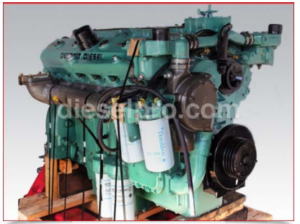
The naturally aspirated 12V71—often referred to as 12V71N—is ideal for operations that prioritize simplicity, durability, and long-term serviceability over high-speed performance. Its blower-driven aspiration provides consistent airflow for combustion, making it suitable for applications where steady RPM and load profiles are the norm.
Marine Use Cases
-
Commercial trawlers
-
Push boats and inland river barges
-
Research vessels and survey boats
-
Smaller tugboats operating in calm conditions
-
Converted liveaboard and recreational vessels
Industrial and Stationary Equipment
-
Stationary generator sets for remote locations
-
Water pumps for irrigation or flood control
-
Fire protection systems and emergency response pumps
-
Fixed-position compressors for construction and mining
-
Oilfield auxiliary engines (such as mud pumps and winches)
Utility Vehicles and Heavy Equipment
-
Vintage highway trucks (pre-1980s models)
-
Older transit or charter buses
-
Crane carriers and material handlers
-
Airfield ground support units
-
Logging skidders (pre-turbo era)
The naturally aspirated 12V71 is commonly found in regions where simplicity is valued over complexity, especially in developing nations or operations with limited access to high-tech maintenance.
12V71 Turbocharged – Common Applications
The 12V71 Turbo—designated 12V71T—features a turbocharger working in tandem with the traditional Roots blower to enhance air induction. This results in higher horsepower, torque, and throttle response. The turbocharged variant is preferred in settings that demand dynamic engine performance, greater fuel efficiency at higher loads, and faster RPM changes.
Marine Applications
-
Commercial fishing vessels (snapper, grouper, shrimp, crab boats)
-
Modern tugboats and offshore service boats
-
Charter and sportfishing yachts requiring responsive acceleration
-
High-speed pilot boats and harbor patrol vessels
-
Large converted pleasure crafts operating at sea
Industrial Applications
-
Rock crushers, grinders, and screeners requiring load adaptability
-
Portable and standby emergency generator systems
-
High-flow fire pumps in industrial and municipal environments
-
Oilfield pressure pumping, fracturing, and coiled tubing units
-
Drill rigs and trenchers with hydraulic power modules
Military and Government Equipment
-
Armored recovery vehicles and bridge launchers
-
Amphibious landing crafts and personnel carriers
-
Power units for mobile base stations and command posts
-
Modified tactical vehicles and surplus refits
-
Emergency watercraft and civil defense platforms
Custom and Repowered Installations
-
Hot rod semi-trucks and exhibition tractors
-
Restored military trucks and civilian conversions
-
Overland expedition rigs with marine engine repower
-
Classic yacht restorations with performance upgrades
Summary Table: Common Applications by Engine Type
|
Application Category |
12V71 Naturally Aspirated |
12V71 Turbocharged |
|
Marine Vessels |
River push boats, trawlers, research boats |
Tugboats, fishing boats, fast yachts |
|
Industrial Equipment |
Gensets, fire pumps, irrigation systems |
Crushers, drill rigs, emergency pumps |
|
Government & Military |
Transport trucks, gensets, utility craft |
ARVs, landing craft, tactical vehicles |
|
Custom Installations |
Vintage buses, crane carriers |
Show trucks, overpowered marine conversions |
See 12V71 Natural (Non-Turbo) Engine Parts for Sale
See 12V71 Turbo Engine Parts for Sale
Additional Resources
Marine Detroit Diesel 12V71 Component Maintenance Life
The Legacy of the Detroit Diesel Marine 12V71 Engine & Its Use Today
Detroit Diesel 12V71 Marine Engine Specifications (Turbo & Non-Turbo)
Detroit Diesel 6V71, 8V71, 12V71, 16V71 Engine Tune Up
Overview of the Detroit Diesel V71 Series Engines (6V71, 8V71, 12V71, 16V71)
General Service Guidelines for Detroit Diesel V71 Series Engines (6V71, 8V71, 12V71, 16V71)
Cylinder Block for Detroit Diesel V71 Series Engines (6V71, 8V71, 12V71, 16V71)
Cylinder Head for Detroit Diesel V71 Series Engines (6V71, 8V71, 12V71, 16V71)
Common Maintenance and Repair Needs for Detroit Diesel V71 Cylinder Heads (6V71, 8V71, 12V71, 16V71)
Fuel and Air Systems for Detroit Diesel 6V71, 8V71, 12V71, and 16V71 Engines
Injectors Maintenance for Detroit Diesel V71 Engines (6V71, 8V71, 12V71, 16V71)
Governor Maintenance for Detroit Diesel V71 Engines (6V71, 8V71, 12V71, 16V71)
Blowers Maintenance for Detroit Diesel V71 Engines (6V71, 8V71, 12V71, 16V71)
Air Filters Maintenance for Detroit Diesel V71 Engines (6V71, 8V71, 12V71, 16V71)
Fuel Leaks Troubleshooting for Detroit Diesel V71 Engines (6V71, 8V71, 12V71, 16V71)
Air Intake Restrictions for Detroit Diesel V71 Engines (6V71, 8V71, 12V71, 16V71)
Injector Malfunction Troubleshooting for Detroit Diesel V71 Engines (6V71, 8V71, 12V71, 16V71)
Lubrication and Cooling Systems for Detroit Diesel 6V71, 8V71, 12V71, and 16V71 Engines
Electrical and Exhaust Systems for Detroit Diesel 6V71, 8V71, 12V71, and 16V71 Engines
Troubleshooting and Preventive Maintenance for Detroit Diesel 6V71, 8V71, 12V71, and 16V71 Engines
Specifications and Torque Tables for Detroit Diesel 6V71, 8V71, 12V71, and 16V71 Engines
Safety Considerations for Detroit Diesel 6V71, 8V71, 12V71, and 16V71 Engines
Lubrication System: Comprehensive Guide For Detroit Diesel V71 Engines (6V71, 8V71, 12V71, 16V71)
Oil Pumps for Detroit Diesel V71 Engines (6V71, 8V71, 12V71, 16V71)
Oil Pressure Regulation For Detroit Diesel V71 Engines (6V71, 8V71, 12V71, 16V71)
Oil Filters for Detroit Diesel V71 Engines (6V71, 8V71, 12V71, 16V71)
Cooling System: Comprehensive Guide For Detroit Diesel V71 Engines (6V71, 8V71, 12V71, 16V71)
Types of Cooling Systems for Detroit Diesel V71 Engines (6V71, 8V71, 12V71, 16V71)
Key Components of the Cooling System for Detroit Diesel V71 Engines (6V71, 8V71, 12V71, 16V71)
Raw Water Pump Specifics for Detroit Diesel V71 Marine Engines (6V71, 8V71, 12V71, 16V71)
Importance of Cooling System Maintenance for Detroit Diesel V71 Engines (6V71, 8V71, 12V71, 16V71)
Detailed Torque and Specifications For Detroit Diesel V71 Engines (6V71, 8V71, 12V71, 16V71)
Step-by-Step Maintenance Procedures For Detroit Diesel V71 Engines (6V71, 8V71, 12V71, 16V71)
Oil Pump Removal and Reassembly for Detroit Diesel V71 Engines (6V71, 8V71, 12V71, 16V71)
Draining and Refilling the Cooling System For Detroit Diesel V71 Engines (6V71, 8V71, 12V71, 16V71)
Troubleshooting Guide For Detroit Diesel V71 Engines (6V71, 8V71, 12V71, 16V71)
Complete Parts Catalog for Detroit Diesel V71 Engines (6V71, 8V71, 12V71, 16V71)
Comprehensive FAQ for Detroit Diesel V-71 Series Manual (6V71, 8V71, 12V71, 16V71)