


 Free US Calls: 1-888-433-4735
 International: 305-545-5588
Understanding the Function of the Bypass Blower on the Detroit Diesel 8V92
The Detroit Diesel 8V92 is one of the most iconic two-stroke engines ever built. Known for its power, durability, and unmistakable sound, the 8V92 has powered everything from commercial vessels and fire pumps to military equipment, coaches, construction machinery, and standby generators. Like all Detroit two-stroke engines, the 8V92 relies on a Roots-type blower for scavenging — the process of pushing fresh air into the cylinders while clearing out exhaust gases.
However, unlike earlier Detroit engines, the 8V92 often incorporates a specialized component called the bypass blower, especially on turbocharged models. The bypass blower is not just an accessory — it is an essential part of how the engine breathes, manages airflow, balances boost pressure, and improves overall performance.
This article explains what the bypass blower does, how it works, and why it is vital to the performance and reliability of the Detroit Diesel 8V92.
Buy Your Detroit Diesel 8V92 Bypass Blower From Diesel Pro Power
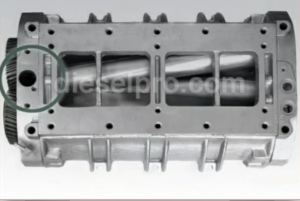
Detroit Diesel Blower for 8V92, 16V92 Bypass – rebuilt
1. Why Two-Stroke Detroits Need a Blower in the First Place
Before understanding the bypass blower, it’s important to understand why the 8V92 (and all Detroit Diesel two-strokes) require a blower at all.
Two-stroke Detroits cannot naturally aspirate. They do not draw in air through piston vacuum the way four-stroke engines do. Instead, they rely on a mechanically driven Roots blower to:
- Push fresh air into the cylinders
- Sweep (scavenge) exhaust gases out
- Provide the oxygen needed for combustion
- Maintain crankcase pressure balance
- Enable smooth idle and cold starts
Without a blower, a two-stroke Detroit will not even idle — it physically cannot breathe.
The 8V92 adds complexity because many versions are turbocharged, and this is where the bypass blower becomes essential.
See Our Catalog Of Blowers For All Detroit Diesel Engine Models
2. The Unique Challenge of Turbocharged 8V92 Engines
On a turbocharged Detroit Diesel 8V92, the turbocharger forces additional air into the intake system. But the engine still needs the blower to scavenge at low RPM, where the turbo does not generate boost.
This creates a challenge:
- At low RPM, the blower must work hard to produce enough air.
- At high RPM, the turbo produces more air than the blower can handle.
Without a control mechanism, this mismatch could create:
- Excess blower drag
- Overheating
- Loss of power
- Turbo surge
- Internal airflow restriction
- Increased fuel consumption
Detroit Diesel solved this problem with the bypass blower system.
Shop Parts For The Detroit Diesel 8V92 Turbo Engine
3. What Is a Bypass Blower?
A bypass blower is a special configuration of the traditional Roots-type blower used on turbocharged Detroit 92-series engines. Instead of forcing all incoming air through the blower at all speeds, the bypass blower includes:
- Internal bypass ports
- Spring-loaded or pressure-controlled valves
- Additional airflow passages
These features allow the blower to operate in two different modes depending on engine speed and turbo boost.
4. How the Bypass Blower Works
A. At Low RPM — Blower Does the Work
When the engine is idling, maneuvering, or running at low speeds:
- The turbo is not producing boost
- The bypass system remains closed
- All intake air is routed through the blower
- The blower handles full scavenging
This allows the engine to:
- Start smoothly
- Idle evenly
- Maintain stable air flow
- Avoid smoking or misfiring
This is critical for marine applications and heavy equipment that frequently run at low speeds.
B. At High RPM — Turbo Takes Over Airflow
When the turbo begins to produce boost (usually above 1,000–1,200 RPM):
- Intake pressure rises
- The bypass valves open automatically
- Air is rerouted around the blower rotors
- The blower stops restricting airflow
This has important advantages:
- Reduced blower load
- Improved horsepower
- Lower blower operating temperature
- Increased turbo efficiency
- More total airflow to the cylinders
The blower still turns, but it no longer throttles or compresses the air — it simply freewheels with reduced parasitic drag.
C. The Result: Balanced Airflow Across the Full RPM Range
The bypass blower allows the Detroit 8V92 to behave like two different engines:
- A scavenger blower–dependent engine at low RPM
- A turbocharged engine at high RPM
This combination yields:
- Better throttle response
- More torque
- Cleaner combustion
- Higher peak horsepower
- Lower smoke output
- More efficient operation under load
Without the bypass function, a turbocharged 8V92 would struggle with airflow at both ends of the RPM band.
5. Why the Bypass Blower Is Essential for Engine Longevity
A properly functioning bypass blower protects the engine from:
A. Excess Heat
Forcing turbocharged air through the blower at high RPM generates enormous heat. The bypass system reduces internal temperatures significantly.
B. Rotor Damage
High-pressure turbo air pushing on the blower rotors without relief can cause:
- Rotor coating damage
- End-plate wear
- Bearing load increase
- Timing gear stress
C. Reduced Turbo Efficiency
Without bypassing, the blower becomes a restriction the turbo must push through, causing turbo surge or boost oscillation.
D. Poor Fuel Economy
Improper airflow causes incomplete combustion, raising fuel consumption.
E. Excess Smoke
Insufficient scavenging creates the classic black smoke associated with failing Detroits.
The bypass blower keeps the 8V92 breathing cleanly, efficiently, and safely across all operating conditions.
6. Signs of a Failing Bypass Blower
Because the blower is so central to engine performance, failure symptoms appear quickly:
- Hard cold starts
- White or blue smoke at idle
- Excessive black smoke at acceleration
- Lack of power under load
- Turbo lag or inconsistent boost
- Rough idle
- High engine temperatures
- Oil leaking from blower seals
- Whining, scraping, or metallic noises from the blower
In turbo models, a failing bypass system usually shows up as:
- Poor top-end power
- Turbo overspeed
- High exhaust temps (EGT)
- Boost pressure spikes or dips
- Excess blower heat
If any of these symptoms appear, the blower must be inspected immediately.
7. Why Replacing a Bypass Blower Is Worth Every Dollar
Replacing or rebuilding a bypass blower is one of the highest-value maintenance actions an owner can take because it restores:
- Engine power
- Fuel efficiency
- Cold-start reliability
- Clean exhaust
- Turbocharger life
- Proper scavenging
- Balanced airflow
- Lower internal temperatures
On a two-stroke Detroit Diesel, the blower is the heart of the entire breathing system. A healthy bypass blower ensures the 8V92 performs like it was designed to — powerful, responsive, and reliable.
Conclusion: The Bypass Blower Is the Key to an Efficient, High-Performance 8V92
The Detroit Diesel 8V92 remains one of the most capable and respected engines ever built. But its performance depends heavily on a properly operating bypass blower — a component that allows the engine to breathe correctly at both low and high RPM.
To summarize, the bypass blower:
- Provides essential scavenging at low speeds
- Allows free-flowing turbo air at high speeds
- Reduces blower load and heat
- Improves fuel efficiency
- Protects the engine from airflow imbalance
- Enhances low-end torque and top-end horsepower
- Ensures smooth, clean, consistent power delivery
For any owner or operator running a turbocharged 8V92, keeping the bypass blower in top condition is non-negotiable.
performance and reliability of the Detroit Diesel 8V92.
Buy Your Detroit Diesel 8V92 Bypass Blower From Diesel Pro Power