San Diego’s long-range tuna fleet is one of the most famous in the world, running multi-day trips 500–1,000+ miles into Mexican waters in search of big yellowfin, bluefin and wahoo. These boats are essentially small ships: 80–120 feet long, carrying 20–35 anglers plus crew, bait, ice and fuel for up to three weeks. At the heart of each operation is a set of hard-running marine diesels that have to be fast, fuel-efficient, reliable and easy to support far from home.
This article looks at the brands and engine models most commonly found in San Diego’s long-range tuna fleet—how the mix has evolved, and why Caterpillar, Cummins, Detroit Diesel and MTU all play important roles.
From Detroit Diesel to Modern High-Speed Four-Strokes
If you go back a few decades, many California sportfishing and commercial boats were built around Detroit Diesel two-stroke engines—especially the 6-71, 8V71, 12V71, 8V92 and 16V92. Compact for their power and relatively simple to service, these engines became the backbone of the West Coast fleet from the 1960s through the 1980s. A lot of early long-range hulls were launched with Detroits, sometimes in twin or even triple engine configurations.
Over time, however, the industry has shifted toward modern four-stroke engines for better fuel economy, lower emissions, and greater power density. That’s where Caterpillar, Cummins and MTU have taken over much of the market. A Diesel Pro Power industry overview notes that charter captains often choose among these three brands based on vessel size, region and operating profile, with all three becoming central to the growth of offshore fishing fleets. Diesel Pro
Today, many San Diego long-range boats have been repowered at least once, replacing older Detroit Diesels with newer Caterpillar, Cummins or MTU powerplants that deliver more horsepower on less fuel.
Caterpillar: The Dominant Player in the Long-Range Fleet
If there’s one brand you’ll hear again and again in conversations about San Diego’s long-range tuna fleet, it’s Caterpillar. Cat engines—especially the C18 and C32—have become the go-to repower choice for many of the marquee boats.
Royal Polaris – Triple Caterpillar C18s
The Royal Polaris, often described as one of the finest and fastest long-range sportfishers in San Diego, is powered by three Caterpillar C18 engines, with a combined output listed at up to 2,200 horsepower. royalpolaris.com+1 That triple-C18 package gives the boat unusually high cruising speed for a long-range platform, which translates into more fishing time on far-off banks like Hurricane Bank or Clarion.
Polaris Supreme – New C18 Mains
The Polaris Supreme recently joined the C18 club. A 2025 update from the boat reports that the crew removed the old mains and prepared the engine room for new Caterpillar C18s as the latest upgrade. longrangesportfishing.net+1 This is a classic example of the repower trend: taking a proven hull and giving it a new “heart” with high-speed Cat four-strokes for improved efficiency and reliability.
C18 and C32 as the Default Sportfishing Choices
Caterpillar actively markets the C18 and C32 as ideal engines for sportfishing boats and high-speed yachts, emphasizing power, speed and peace of mind. Cat That sales focus lines up almost perfectly with what San Diego’s long-range operators need:
-
Strong mid-20-knot top speeds to shorten the long runs south
-
Good fuel economy for 10–23 day trips
-
Global parts and service support
-
Electronic controls and monitoring for modern wheelhouses
Because of this, it’s fair to say that Caterpillar is now the most visible engine brand in the long-range tuna fleet, particularly on the larger boats (90–115 feet) that run longer trips and carry heavier loads.
Cummins: Workhorse Power for Mid-Size and Repowered Boats
Cummins is another major player in West Coast charter and commercial boats. While specific engine lists are not always published for each San Diego long-range vessel, Cummins high-horsepower models such as the KTA19, KTA38, KTA50 and newer QSK series are widely used in commercial fishing and offshore fleets of similar size.
Key reasons captains choose Cummins include:
-
Strong reputation for durability in continuous-duty applications
-
Excellent global parts support
-
Competitive fuel efficiency
-
Long track record in both displacement and semi-displacement hulls
In San Diego’s long-range scene, Cummins power tends to be more common on medium-size long-range and “extended range” boats, and on some hulls that originally ran Detroit Diesels and were later repowered with modern Cummins four-strokes. Many operators who run mixed portfolios of vessels—crew boats, commercial fishing boats and sportfishers—like Cummins for the ability to standardize parts and service across their fleet.
Detroit Diesel: The Legacy Power Still Turning
Although the market has largely moved toward four-stroke engines, Detroit Diesel still has a significant legacy presence in the San Diego fleet—especially in older hulls that have not yet been repowered or that use Detroit Diesels in auxiliary roles (generators, hydraulics, etc.).
Typical Detroit models historically seen in West Coast sportfishing boats include:
-
71 Series: 6-71, 8V71, 12V71
-
92 Series: 6V92, 8V92, 12V92, 16V92
-
149 Series on some larger commercial hulls
These two-stroke engines made sense for early long-range charter boats because:
-
They produced a lot of power in a relatively compact footprint
-
Parts and mechanics were easy to find in California ports
-
Captains were familiar with their sound, feel and maintenance
Even as many primary propulsion systems have switched to Cat or Cummins, Detroit Diesel remains important in the support ecosystem: many San Diego marine shops still rebuild Detroits, and parts suppliers like Diesel Pro Power continue to stock overhaul kits, heads, blowers and water pumps for 71, 92 and 149 series engines used in older boats and support craft. Diesel Pro
MTU and Other High-Performance Options
At the very high end of speed and power, some sportfishing and expedition-style boats use MTU engines, particularly the 2000- and 4000-series V-configuration engines. While MTU is more prevalent in luxury sportfishing yachts and fast ferries than in classic long-range boats, it does appear in the broader Southern California offshore fleet, especially among newer, higher-speed platforms that serve crossover roles (private boats that also charter long-range-style trips).
For the traditional San Diego long-range tuna fleet—35-passenger, 10–23-day boats—the mix is still heavily skewed toward Caterpillar, Cummins and Detroit Diesel, with MTU showing up more often in newer or custom high-speed builds rather than the classic commercial-style long-range hulls.
Representative Boats in the Fleet
Even when a boat’s exact engine model isn’t public, looking at the fleet lineup helps illustrate brands and trends.
Big, Long-Trip Specialists
-
Royal Polaris – 113′ x 30′, triple Caterpillar C18 mains. royalpolaris.com+1
-
Excel – Often described as the largest and most luxurious long-range vessel, 124′ class with long-range destinations like Hurricane Bank and Puerto Vallarta; marketed as “the largest long-range sportfishing vessel in the world.” fishermanslanding.com+1 Public specs focus more on passenger amenities than engines, but given her size and operating profile, she fits the typical big-boat pattern of multi-engine Caterpillar or Cummins power.
90-Foot Class Long-Range Boats
-
Polaris Supreme – About 90′ x 25′, recently announcing new Caterpillar C18 mains, underscoring the shift to modern Cat power. longrangesportfishing.net+1
-
Royal Star – 92′ x 25′, a purpose-built long-range boat launched in 1986, often described as one of the most modern and luxurious vessels in the fleet. Royal Star+1
-
American Angler – 90′ x 26′, built in the mid-1980s, also part of the core long-range fleet and frequently upgraded. americananglersportfishing.com+1
Other well-known boats like the Shogun, Intrepid, Independence, Red Rooster III, Spirit of Adventure and Searcher round out the core long-range tuna fleet. Most have followed a similar evolutionary path: originally built with Detroit Diesel or early four-strokes, then repowered over time with modern Caterpillar or Cummins packages as horsepower demands, fuel costs and emissions rules changed.
What These Engines Have to Do for the San Diego Tuna Fleet
Regardless of brand, the engines in San Diego’s long-range tuna boats all have to meet a similar set of real-world requirements:
-
High Average Speed Over Long Distances
Boats often run 1,000–2,000 nautical miles per trip when you factor in transit, searching, and trolling. Faster hulls and engines give passengers more time fishing and less time running.
-
Fuel Efficiency and Range
A 16- or 20-day trip to remote banks like Clarion or the Buffer Zone means the boat must carry massive fuel loads and still leave room for bait, fish holds and passengers. Engines like the Cat C18 and C32 are popular because they offer strong fuel economy at long-range cruise settings. Cat
-
Reliability Far From Port
A breakdown 800 miles offshore is not an option. Operators select engines with strong service histories and ensure parts are compatible with what local mechanics and suppliers can support in San Diego and Baja.
-
Supportability and Parts Availability
Caterpillar, Cummins and Detroit Diesel all maintain strong parts networks and dealer relationships in Southern California and Mexico, which is critical for fast turn-arounds between trips.
The Trend: Repower Rather Than Replace the Boat
One of the biggest patterns in San Diego’s long-range tuna fleet is repower instead of replace. Boats like the Royal Polaris and Polaris Supreme have decades-proven hulls and layouts that passengers love. Instead of building brand-new vessels, owners pull the old engines, update to modern Caterpillar or Cummins packages, refresh systems and accommodations, and keep the same hulls working.
Repowers bring:
-
Higher cruise speeds
-
Better fuel economy
-
Lower emissions
-
Quieter operation
-
Improved monitoring and diagnostics
That’s why you increasingly see Caterpillar C18 and C32, plus large-frame Cummins engines, dominating the engine rooms of boats that started life powered by Detroits or older four-strokes.
Summary: The Engine Mix Behind San Diego’s Long-Range Tuna Boats
While every boat is a little different, the overall picture for San Diego’s long-range tuna fleet looks like this:
-
Legacy foundation: Detroit Diesel 71, 92 and 149 series once powered much of the fleet and still appear in older installations and support roles.
-
Modern workhorses: Caterpillar C18 and C32 four-strokes are now among the most common mains on major long-range boats, with Cummins high-horsepower engines also widely used. Diesel Pro+1
-
High-end niche: MTU power shows up more in newer, high-speed or custom yachts that sometimes overlap with long-range tuna fishing.
-
Repower culture: Rather than building new hulls, many owners upgrade proven vessels with new engines, electronics and systems, keeping beloved boats like Royal Polaris, Royal Star, Excel, Polaris Supreme and American Angler competitive for modern long-range fishing.
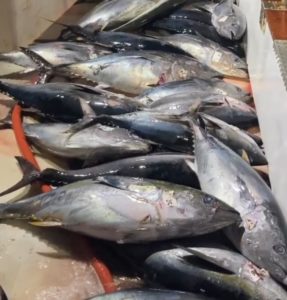
For anglers, the takeaway is simple: behind every three-digit yellowfin or trophy bluefin photo is a set of hard-working marine diesels—most often Caterpillar, Cummins or Detroit Diesel—that make San Diego’s long-range tuna fleet possible.