


 Free US Calls: 1-888-433-4735
 International: 305-545-5588
Detroit Diesel 4-53 Cylinder Heads: Legacy, Functionality, and Modern Applications
Introduction
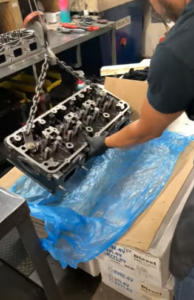
The Detroit Diesel 4-53 engine is one of the most durable and compact two-stroke diesel powerplants ever built. Part of the renowned 53 Series, the 4-53 earned its place in military, industrial, marine, and agricultural markets around the world. At the heart of this engine’s performance is its cylinder head—a component often overlooked in casual conversation but critically important to reliability, power output, and service life.
This article takes an in-depth look at the Detroit Diesel 4-53 cylinder head: what makes it unique, how it functions, when and why it needs service or replacement, and where you can still find or rebuild them today.
Overview of the Detroit Diesel 4-53 Engine
What Is the 4-53 Engine?
The Detroit Diesel 4-53 is a four-cylinder, inline, two-stroke diesel engine. Like the rest of the 53 Series, it was designed to be compact, robust, and extremely versatile.
-
Configuration: Inline-4
-
Cycle: Two-stroke
-
Displacement: 53 cubic inches per cylinder × 4 = 212 cubic inches total
-
Power Output: Ranges from 110 HP to 160 HP
-
Cooling: Liquid-cooled
-
Aspiration: Naturally aspirated or turbocharged
-
Applications: Military APCs, forklifts, gensets, loaders, and marine vessels
Evolution of the 4-53 Cylinder Head
The 4-53 engine was available with both 2-valve and 4-valve cylinder heads depending on model and production year. Earlier models used 2-valve designs for simplicity, while later versions adopted 4-valve heads for improved breathing, performance, and emissions characteristics.
Detroit 4-53 Cylinder Head Design
Cylinder Head Composition
-
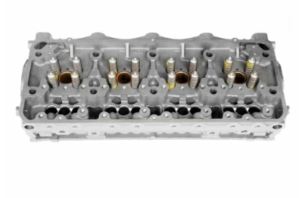
Material: High-strength cast iron
-
Weight: ~85–110 lbs depending on valve configuration
-
Cooling Channels: Internally cast for efficient heat dissipation
-
Valve Count: Typically 2 or 4 per cylinder (8 or 16 total for the engine)
-
Ports: Intake ports are fed by the blower; exhaust ports are located in the head
Functional Role
The cylinder head serves several vital functions:
-
Houses the intake and exhaust valves
-
Supports the injector bore and mounts
-
Forms the combustion chamber roof
-
Seals pressure with the cylinder block using the head gasket
-
Conducts heat away from combustion zones into the cooling system
Valve Layout
-
2-Valve Heads: One intake, one exhaust valve per cylinder
-
4-Valve Heads: Two intake, two exhaust valves per cylinder
-
Valve orientation and geometry are precision-machined to support uniflow scavenging, characteristic of two-stroke Detroit Diesels.
Technical Features of the 4-53 Cylinder Head

Injector Mounting
Each cylinder head features direct injector ports. The injectors sit vertically in a bore between the valves and are clamped using brackets built into the head.
-
Injector fit is critical—wear or misalignment can cause improper spray patterns or fuel leakage.
-
Rebuild kits often include injector sleeve seals or O-rings to ensure proper sealing and longevity.
Valve Seats and Guides
-
Valve seats are hardened for wear resistance and can often be replaced during head reconditioning.
-
Valve guides are also replaceable and are key to proper valve alignment and oil control.
Cam Follower and Rocker Arm Support
Though the camshaft is located in the engine block, the cylinder head houses the rocker arms that actuate valves via pushrods. The head must maintain extremely tight tolerances to ensure timing precision.
Common Failure Points and Warning Signs
Overheating and Cracking
Due to the high compression and two-stroke firing frequency, 4-53 heads are exposed to continuous thermal stress. Cracking can occur:
-
Around injector bores
-
Between valve seats
-
In coolant passages
Valve and Seat Wear
Because of the two-stroke cycle, exhaust valves open far more frequently than in four-stroke engines. Signs of wear include:
-
Excessive valve lash
-
Low compression
-
Misfiring or hard starts
Warping
Overheating or poor installation can cause head warping, which leads to:
-
Head gasket failure
-
Coolant loss
-
Oil contamination
Maintenance and Rebuilding
When to Replace or Rebuild
You should inspect or replace your 4-53 cylinder head during:
-
Major overhauls
-
Persistent loss of compression
-
Head gasket failure
-
Coolant in oil or vice versa
-
Visible cracks or casting damage
Rebuilding Steps
-
Disassembly and Inspection
-
Remove valves, injectors, and springs
-
Check for cracks with magnetic particle inspection or dye penetrant
-
-
Surface Resurfacing
-
Ensure mating face is flat within spec
-
Typical flatness tolerance is <0.002″
-
-
Seat and Guide Replacement
-
Press-in hardened valve seats if damaged
-
Ream or replace valve guides
-
-
Pressure Testing
-
Coolant passages tested under 30-50 psi
-
-
Assembly
-
New valves, springs, retainers, injector sleeves, and seals installed
-
Rocker assemblies torqued to spec
-
Torque Specifications
-
Cylinder Head Bolts: 170–190 ft-lbs
-
Rocker Arm Shaft: 55–65 ft-lbs
-
Injector Hold-Down Clamp: 25–35 ft-lbs
(Refer to your specific manual revision for model-year specific specs.)
Cylinder Head Compatibility and Part Numbers
OE and Aftermarket Reference
Original Detroit Diesel part numbers vary slightly by year and configuration. Some common examples include:
-
5141305: 2-valve head for early non-turbo 4-53s
-
5143028: Turbocharged-compatible 4-valve head
-
5144003: Late-model aluminum versions used in military gensets (rare)
Diesel Pro Power offers fully compatible aftermarket heads built to OEM dimensions, as well as rebuild kits for original heads. These include:
-
Valve sets
-
Seats and guides
-
Springs
-
Injector sleeves
-
Seals and gaskets
Compatibility Notes
-
All 4-53 heads must match the corresponding block casting and port layout.
-
Turbocharged engines use different exhaust valve metallurgy and spring pressures.
-
If replacing with a 4-valve head, camshaft specs and injector timing must be adjusted.
Where to Find Detroit 4-53 Cylinder Heads Today
New and Remanufactured Heads
Diesel Pro Power and other trusted suppliers stock remanufactured or brand-new heads for 4-53 engines. Reman heads are:
-
Crack-tested
-
Resurfaced
-
Reassembled with new internals
-
Pressure-tested for coolant and oil integrity
Used Heads
Found on:
-
Surplus military equipment
-
Junkyards with old construction equipment
-
Marine salvage yards
-
Online marketplaces like eBay, Surplus Record, or Facebook Marketplace
Always pressure-test used heads before use.
Rebuild Kits and Support
If you wish to rebuild your own head, Diesel Pro Power offers comprehensive rebuild kits and service manuals to walk you through the process.
Modern-Day Use Cases
Marine Vessels
Many small tugboats, commercial fishing boats, and work skiffs still use the 4-53 due to its reliable cold-starting and simple design. The cylinder heads, being robust and rebuildable, often last through multiple engine rebuilds.
Military Vehicles
The U.S. Army used 4-53-powered generators and tracked vehicles throughout the Cold War. Restored M113 armored personnel carriers and gensets are still functional today with original heads in good condition.
Industrial Equipment
Forklifts, cranes, and irrigation pumps in rural or off-grid operations still rely on 4-53 powerplants. Cylinder heads are maintained or replaced as part of scheduled service.
Off-Road and Restoration
Collectors and diesel enthusiasts often seek out original heads for restoration projects involving:
-
Classic dump trucks
-
Buses
-
Tractors
-
Fire trucks
Some even build custom rat rods using Detroit Diesel engines for sound and visual appeal.
Tips for Longevity and Peak Performance
Maintain Cooling System
The number one cause of head failure is overheating. Use quality coolant, regularly inspect hoses and radiators, and never run the engine with low coolant.
Use Proper Torque Patterns
Always follow cross-pattern torque sequences in multiple stages. Improper bolt tension leads to leaks, warping, and cracked castings.
Don’t Overfuel or Overrev
Over-fueling the engine via larger injectors or excessive governor settings can elevate combustion temps beyond what the head is rated for. This leads to premature wear and cracking.
Monitor Valve Lash
Check valve lash periodically to avoid piston-to-valve contact or poor sealing. Out-of-spec lash can indicate seat wear or guide issues.
Frequently Asked Questions (FAQ)
Q1: Can I convert my 2-valve 4-53 to a 4-valve head?
A: Yes, but you’ll need to ensure compatibility with your camshaft, turbo setup, and injector timing. It may also require a newer rocker assembly.
Q2: Are aftermarket heads as reliable as OEM?
A: When purchased from trusted suppliers like Diesel Pro Power, premium aftermarket heads match or exceed OEM metallurgy and tolerances.
Q3: Is resurfacing necessary during every rebuild?
A: Yes. Even if the head looks flat, small warps can cause sealing issues. Resurfacing is critical for proper gasket sealing.
Q4: How long do rebuilt heads last?
A: With proper maintenance, rebuilt heads can last 5,000–10,000 operating hours, depending on load, environment, and cooling system health.
Q5: Can I run a 4-53 head on biodiesel or alternative fuels?
A: Only if the injector seals and valve seats are compatible. Always check chemical compatibility and cooling requirements.
Q6: What are signs of a bad cylinder head on the 4-53?
A: Coolant in oil, excessive white smoke, repeated head gasket failures, low compression, and overheating are all warning signs.
Conclusion
The Detroit Diesel 4-53 cylinder head is more than just a component—it’s the crown atop one of the most iconic engines in diesel history. Built for resilience, ease of service, and unmatched longevity, these heads have powered machines in some of the world’s toughest environments.
Today, thanks to the ongoing availability of rebuild kits and replacement parts, the 4-53’s legacy continues. Whether you’re maintaining a marine vessel, restoring a piece of military history, or keeping an off-grid generator alive, the cylinder head is the key to reliable two-stroke performance.
If you’re looking for a rebuilt 4-53 cylinder head, a premium aftermarket version, or a full rebuild kit, Diesel Pro Power can help you restore and maintain your engine for decades to come.