


 Free US Calls: 1-888-433-4735
 International: 305-545-5588
Why Diesel Pro Power Charges a Core Charge When You Buy a Rebuilt Twin Disc or Allison Transmission
Rebuilt marine and industrial transmissions—especially from manufacturers like Twin Disc and Allison—play a crucial role in keeping commercial vessels, workboats, fishing fleets, industrial equipment, and heavy-duty machinery operating efficiently. These transmissions are engineered to withstand tremendous torque loads, constant shifting cycles, harsh marine environments, and long service hours. Rebuilding them correctly requires precision machining, OEM-level components, and expert workmanship.
When customers purchase a rebuilt transmission from Diesel Pro Power, they will see an additional cost known as a core charge. This charge is standard across the diesel engine and drivetrain industry, but many customers wonder why it exists and why the supplier needs the old transmission back. The truth is that the core return process is essential for maintaining the supply chain, keeping rebuild prices affordable, and ensuring that high-quality rebuilt units remain available for operators around the world.
This article explains what a core charge is, why Diesel Pro Power uses this system, and how it benefits both the company and the customers who rely on rebuilt Twin Disc and Allison marine transmissions.
Shop Twin Disc Marine Transmissions
Shop Allison Marine Transmissions
What Is a Core Charge?
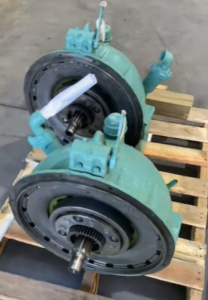
A core charge is a refundable deposit added to the price of a rebuilt transmission. When you return your old transmission—known as the core—in rebuildable condition, Diesel Pro Power refunds the core charge back to you.
Your old transmission then enters the rebuilding cycle, where experts inspect, clean, machine, and reassemble it into a fully renewed unit that can be sold to the next customer.
This system is similar to returning an alternator, starter, or injection pump—just on a far larger and more complex scale.
Why Rebuilt Transmissions Require a Core Exchange
1. Transmission housings are no longer manufactured for many classic models
Many Twin Disc and Allison marine transmissions still in service today were built decades ago. Although these transmissions are extremely durable, the original manufacturers often no longer produce new housings and internal casings. Without access to the original core housings, the supply of rebuildable units would gradually disappear.
By returning your old transmission:
- The housing can be restored
- The internal components can be inspected and replaced
- The rebuilt unit remains in circulation
- Classic engines and vessels continue operating for decades
If cores were not returned, operators would eventually lose access to rebuilt units entirely—forcing costly repowers or full drivetrain redesigns.
2. Core returns keep rebuilt transmission prices affordable
The most expensive parts of a transmission are the heavy, structural components:
- Main housing
- Gear sets
- Clutch drums
- Valve body casings
- Shafts and carriers
If Diesel Pro Power had to source or manufacture brand-new housings, the price of rebuilt Twin Disc and Allison transmissions would rise dramatically. Instead, by reusing qualified cores, the company can keep rebuild pricing competitive while still maintaining strict quality standards.
The core system ensures:
- Lower total rebuild costs
- Stable pricing for fleet operators
- Continued availability of affordable replacement transmissions
Without cores, each rebuilt transmission would cost thousands more.
3. Many internal components are rebuildable to factory specifications
A core is more valuable than most customers realize. Much of a transmission can be renewed through:
- Precision machining
- Replacement of worn bearings and clutches
- Re-shimming and calibration
- Upgrading seals and gaskets
- Rebuilding the valve body
- Pressure testing and quality validation
Diesel Pro Power has long-standing relationships with professional rebuilders who can take an older transmission case and bring it back to like-new performance. Because the majority of the structural components are reusable, securing a steady supply of cores enables the rebuilder to offer a consistent, high-quality product.
4. Cores ensure the continuity of the global marine and industrial supply chain
Twin Disc and Allison transmissions are used across:
- Tugboats
- Fishing vessels
- Ferries
- Pleasure craft
- Auxiliary engines
- Construction equipment
- Pumping and hydraulic systems
These transmissions are mission-critical. A vessel cannot move, a generator cannot spin, and a pump cannot function without a working gearbox. Diesel Pro Power helps keep this entire ecosystem running by maintaining a cycle of rebuildable cores.
If customers kept their old transmissions or disposed of them, the availability of rebuilt units would disappear over time. The core charge is a financial incentive that keeps the equipment ecosystem alive.
5. Core charges discourage scrapping, damage, and improper disposal
A transmission carcass may look like scrap metal to some operators—but to rebuilders, it contains precision-machined components that can be renewed and reused. Without a core charge in place, many old transmissions would be:
- Sold as scrap
- Left at the bottom of a bilge
- Discarded in a yard
- Damaged beyond repair
The core return process ensures that old units are kept intact and handled properly, so Diesel Pro Power and its rebuilders can restore them to operational condition.
6. Returned cores undergo professional inspection and grading
Once your old Allison or Twin Disc transmission arrives at the rebuilder’s facility, the unit is:
- Disassembled
- Degreased
- Cleaned
- Inspected
- Cataloged
- Assessed for rebuildability
Only transmissions that meet structural criteria enter the rebuild pipeline. Severely damaged or modified units may reduce the core refund, which is why Diesel Pro Power publishes clear guidelines on core condition expectations.
This inspection process ensures that future customers receive only the highest-quality rebuilt transmissions.
How Core Charges Benefit the Customer
While the core charge protects Diesel Pro Power’s supply chain, it also delivers several important benefits to customers:
1. Lower purchase price for rebuilt transmissions
By returning your core, you’re ensuring the availability of affordable replacements—instead of paying the higher cost of remanufacturing brand-new housings.
2. Faster shipment and reduced downtime
Because Diesel Pro Power maintains core inventory, customers can receive rebuilt transmissions quickly without waiting for custom machining or specialty parts.
3. High-quality, consistent rebuilt units
Every core that goes through the rebuild cycle is cleaned, machined, tested, and assembled to high specifications, giving customers standardized quality.
4. A responsible, sustainable reuse process
Core return programs reduce waste and support responsible recycling and restoration of industrial equipment.
Why Diesel Pro Power Uses This Industry-Standard System
Diesel Pro Power has earned a global reputation for supplying reliable rebuilt Twin Disc and Allison transmissions. The core charge system is what makes this possible. By ensuring a steady stream of rebuildable cores, the company can:
- Offer competitive pricing
- Maintain large in-stock inventory
- Deliver transmissions quickly worldwide
- Guarantee consistent quality
- Support legacy equipment still in service
Customers get better prices, faster service, and a product that performs to factory standards—all made possible by the core return program.
Conclusion
A core charge is not an extra fee—it’s part of a proven, industry-standard system that keeps rebuilt Twin Disc and Allison transmissions available, affordable, and reliable for customers worldwide. When you purchase a rebuilt transmission from Diesel Pro Power, your returned core becomes the next high-quality rebuilt unit for another operator. It’s a cycle that preserves equipment lifespan, stabilizes pricing, and supports an entire ecosystem of marine and industrial machinery.
Shop Twin Disc Marine Transmissions
Shop Allison Marine Transmissions