


 Free US Calls: 1-888-433-4735
 International: 305-545-5588
Why Tugboats Around the World Still Utilize Two-Stroke Detroit Diesel Engines
For more than half a century, two-stroke Detroit Diesel engines have powered workboats, fishing vessels, military craft, generators, and countless pieces of industrial equipment. But nowhere has their impact been more enduring—or more respected—than in the global tugboat industry.
From small harbor pushboats to compact line-handling vessels to rugged river tugs battling swift currents, Detroit Diesel engines have remained a cornerstone of tugboat propulsion long after many other engine platforms faded into history. While new propulsion technologies emerge—electronic diesels, hybrid systems, high-horsepower four-strokes—thousands of tugboats worldwide still rely on Detroit Diesel two-strokes such as the 6-71, 8V71, 12V71, 6-92, 8V92, and 16V92.
Why? Because in real-world maritime operations, reliability, simplicity, torque delivery, and serviceability matter more than anything else.
This article explores the deeper reasons why two-stroke Detroit Diesels remain in tugboat service across the globe—why they continue to outperform expectations, why operators still trust them, why fleets maintain them decades after production ended, and why replacing them is not always the smart financial or operational decision.
Shop Parts For Detroit Diesel Engines
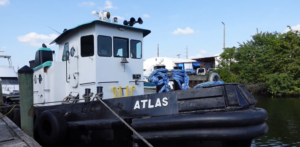
1. Detroit Diesel Two-Strokes Deliver Instant, Predictable Torque—Perfect for Towing
Tugboats require immense low-end torque. Whether pulling a barge against the current, pushing a freighter off a berth, or maneuvering in confined channels, the ability to deliver immediate power at low RPM is crucial.
Detroit Diesel two-strokes excel at this because:
- Their power strokes occur every crankshaft revolution—twice as often as a four-stroke engine.
- Their mechanical injection and scavenging system generate rapid throttle response.
- The blower (and turbocharger on TI models) maintains airflow and torque even at low RPM.
For tugboat captains, this means:
- Instant throttle response when quick maneuvering is needed.
- Strong bollard pull for their displacement and horsepower.
- Predictable power curves that don’t sag under sudden load.
This characteristic remains one of the key reasons operators keep Detroit Diesel engines in tugboats: they provide the grip and push needed for real towing situations—not just open-water cruising.
2. Mechanical Simplicity Makes Them Ideal for Harsh Working Environments
Tugboats often operate under the harshest conditions:
- Tight, confined maneuvering
- High load at low RPM
- Frequent gear shifting
- Long periods of idling
- Heavy vibration
- Saltwater corrosion
- Limited access to high-tech marine facilities
Detroit Diesel two-strokes were designed to thrive under these realities. Their mechanical systems include:
- Mechanical unit injectors
- Gear-driven blowers
- No electronic control modules
- Simple cooling and lubrication circuits
- Robust cast-iron designs
This makes them remarkably tolerant of:
- Dirty fuel
- Electrical system issues
- Onboard vibration
- Operating abuse
- Long service intervals
In many parts of the world, tugboats operate far from major repair hubs. An engine that can be maintained with simple tools—and without laptops or diagnostics—is invaluable.
3. Tugboat Crews Know How to Maintain Them
A major reason Detroit Diesels endure in tugboats is cultural: the maritime workforce understands them.
Marine engineers and captains know how to:
- Tune injectors
- Adjust the valves and rack
- Perform blower service
- Replace water pumps
- Diagnose symptoms by sound and smoke
- Conduct field repairs without special diagnostic equipment
This institutional knowledge has been passed down for generations.
In many tug companies—especially family-owned, regional, or long-established operators—the ability to maintain Detroit Diesels is considered a core skill. Training crews on electronic engines requires cost, time, and new equipment; maintaining Detroits does not.
4. Parts Availability Remains Strong Through the Aftermarket
Despite being out of production, Detroit Diesel two-stroke engines enjoy one of the strongest aftermarket ecosystems in marine history. Companies like Diesel Pro Power still stock:
- Cylinder kits
- Blowers and turbos
- Heads
- Cooling parts
- Fuel components
- Gasket sets
- Starters and alternators
- Raw water pumps
- Rebuild kits
- Sensors and switches
- Complete overhaul kits
This availability keeps vessels operating inexpensively compared to full repowers.
Globally, parts support remains robust because:
- The engines were produced in huge numbers.
- They were used in marine, military, industrial, and transportation sectors.
- Mechanics and yards are familiar with them.
For tugboat operators who must control maintenance costs, this support network is a major advantage.
Shop Parts For Detroit Diesel Engines
5. Detroit Diesels Are Affordable to Rebuild—Extending Vessel Life
Unlike modern electronic diesels, a Detroit Diesel can be overhauled for a fraction of the cost of replacing it. Many tugboat operators continue to rebuild these engines every 10,000–15,000 hours.
Benefits include:
- Cost-effective in-frame rebuilds
- Long-term familiarity for mechanics
- Ability to reuse components
- Predictable overhaul cycles
- Minimal downtime
A full repower, by contrast, can cost six figures—not including new transmissions, shaft modifications, cooling system upgrades, and electrical integration. For many workboats worth $200,000–600,000, such a repower is financially unjustifiable.
A rebuilt Detroit gives the vessel another decade of reliable service for a fraction of that cost.
6. Throttle Response and Maneuverability Are Ideally Suited for Tug Work
Tug captains often describe Detroit Diesels as “honest” engines. When you move the throttle, the engine responds immediately—crucial when:
- Backing a barge through a narrow cut
- Holding station near a freighter
- Nudging a vessel into position
- Working in currents or tidal swings
- Pairing with mechanical transmissions for instant engagement
Electronic engines often lag slightly while the ECM adjusts fueling. That delay can be unacceptable in tight maneuvering situations where timing and responsiveness are critical to safety.
Detroit Diesels feel direct and connected—qualities tug operators prize.
7. Their Two-Stroke Design Handles Continuous Heavy Loads Exceptionally Well
Tugboats often operate at:
- Low speed
- High load
- Long duty cycles
Two-stroke Detroit Diesels are uniquely suited to handle this because:
- Blower scavenging prevents cylinder wall wetting
- Frequent firing strokes smooth load spikes
- Cooling and lubrication systems are simple and robust
- Power delivery remains stable under load
Four-stroke engines can experience carbon buildup, overheating, or turbo lag under these conditions. Detroit Diesels rarely do when maintained correctly.
This load tolerance has made them favorites for inland tugs, harbor tugs, and pushboats for generations.
8. Noise and Vibration Are Acceptable—Even Preferred—on Tugboats
The trademark Detroit Diesel sound—the high, clear, mechanical growl—is iconic in the tugboat world. Tug crews often describe the noise as:
- A cue for engine health
- A signal that the engine is loaded correctly
- A familiar rhythm that helps detect problems early
While modern engines are quieter, tugboats are not luxury yachts. Noise is rarely a concern; engine feedback is. Detroit Diesels offer unmistakable acoustic signals:
- Injector misbalance
- Blower wear
- Valve lash drift
- Improper timing
These cues help crews catch issues early in the field—long before catastrophic failures occur.
9. In Remote Regions, They Are Often the Only Practical Engine
Many tugboats operate outside major maritime hubs—in areas where modern electronic engine support simply isn’t feasible.
These include:
- Caribbean islands
- Southeast Asia
- Latin America
- Africa
- Alaska
- Remote river systems
In these locations:
- Mechanics have limited access to specialized tools
- Electronic parts are difficult to source
- Fuel quality may be inconsistent
- Electrical systems may be unreliable
Detroit Diesels are built for these realities. They are engines designed to run, and keep running, without depending on delicate electronics or pristine operating conditions.
10. Repowering Isn’t Always the Right Business Decision
A tugboat is a working asset. Repowering can cost:
- $150,000–$400,000+ per vessel
- Months of downtime
- Additional costs for transmissions, shafts, controls, exhaust, and cooling
A rebuilt Detroit Diesel, by contrast:
- Costs a fraction of that
- Can be installed quickly
- Does not require major system redesign
- Keeps the vessel earning revenue
For companies with multiple tugs, preserving Detroit Diesels is often the sound financial strategy—not a compromise.
11. They Meet the Needs of the Tug Market Better Than Many Alternatives
Electronic engines offer lower emissions and better fuel economy, but tugboats prioritize:
- Reliability over efficiency
- Torque over horsepower
- Simplicity over complexity
- Repairability over software
Detroit Diesels align perfectly with these needs.
Furthermore, many tugboats are not required to meet the strictest emissions standards, especially:
- Older vessels
- Non-U.S. flagged vessels
- Inland craft
- Small regional operators
This regulatory environment allows the continued operation of these classic two-strokes.
12. Detroit Diesel Engines Have a Cultural Legacy in the Tugboat World
Beyond their practicality, Detroit Diesels carry immense legacy value. Many captains, engineers, and long-time mariners grew up with the unmistakable sound of a 6-71 or 8V71 roaring in the engine room.
They trust these engines because:
- They’ve seen them take abuse and survive
- They’ve learned to rebuild them at sea
- They’ve heard the engines run with cracked heads and still get home
- They know the engines inside and out
In maritime culture, trust is earned through experience—and Detroit Diesel engines have earned it.
Conclusion: The Detroit Diesel Two-Stroke Will Continue Powering Tugboats for Years to Come
Despite the age of their designs, two-stroke Detroit Diesel engines remain deeply embedded in the tugboat industry for compelling reasons:
- Unmatched torque for towing
- Fast throttle response for maneuvering
- Mechanical simplicity
- Excellent parts availability
- Low operating costs
- Crew familiarity
- Easy field repairability
- Long service life
- Ideal performance at tugboat duty cycles
New technologies will continue to reshape the maritime landscape, but for many tugboat operators—especially those outside major ports—the Detroit Diesel remains not just viable, but ideal.
It is a testament to brilliant engineering that engines designed in the 1930s, 40s, and 50s are still moving the world’s toughest workboats in the 2020s and beyond.
The Detroit Diesel two-stroke isn’t just an engine.
It’s a maritime legend—one that continues to earn its place in the world’s tug fleets every single day.
Shop Parts For Detroit Diesel Engines