


 Free US Calls: 1-888-433-4735
 International: 305-545-5588
️
Understanding the Crosshead (Two-Piece) Piston in Detroit Diesel 53 Series Engines
How It Works and How It Differs from a One-Piece (Trunk) Piston
The Detroit Diesel 53 Series engines—such as the 3-53, 4-53, and 6-53—are compact, two-stroke diesel engines that earned a reputation for durability, versatility, and ease of service in marine, industrial, military, and power generation applications. One of the most important—and often misunderstood—design features found in many 53 Series engines is the crosshead piston, also referred to as a two-piece piston.
To understand why Detroit Diesel used this design, and how it differs from a one-piece (trunk) piston, it’s important to look at how two-stroke Detroit engines operate, the stresses involved, and the long-term service considerations that influenced their engineering choices.
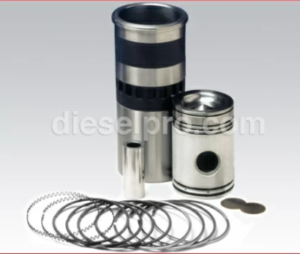
Shop Parts For Detroit Diesel 53 Series Engines
Buy Detroit Diesel 3-53 Parts
Buy Detroit Diesel 4-53 Parts
Buy Detroit Diesel 6V53 Parts
Buy Detroit Diesel 8V53 Parts
What Is a Crosshead (Two-Piece) Piston?
A crosshead piston in a Detroit Diesel 53 Series engine is a piston assembly made up of two primary components:
- The piston crown (upper piston)
- The crosshead (lower piston / slipper)
These two pieces are mechanically connected but serve different functions inside the cylinder.
The Piston Crown
The piston crown is the upper portion that:
- Contains the piston rings
- Seals combustion pressure
- Is exposed directly to heat and combustion forces
This component handles the thermal and sealing responsibilities of the piston assembly.
The Crosshead
The crosshead sits below the piston crown and:
- Connects to the connecting rod
- Guides piston movement
- Absorbs side thrust forces
By separating combustion duties from load-bearing duties, the crosshead design reduces wear and improves durability—especially in two-stroke engines like the 53 Series.
Why Detroit Diesel Used Crosshead Pistons in the 53 Series
Detroit Diesel two-stroke engines operate differently than four-stroke engines. In the 53 Series:
- Exhaust gases exit through ports in the cylinder liner
- Fresh air is forced in by a blower
- The engine fires every revolution
This design places continuous and uneven side loads on the piston and liner. Detroit Diesel engineers recognized that managing these forces was critical for liner life and long-term reliability.
The crosshead piston was their solution.
How the Crosshead Design Works in Operation
During engine operation:
- Combustion pressure acts on the piston crown
- Side thrust from the connecting rod is transferred to the crosshead
- The crosshead rides against the liner or guide surfaces
This means:
- The piston crown stays better aligned in the liner
- Ring wear is more even
- Liner scuffing is reduced
In essence, the crosshead acts as a buffer between combustion forces and mechanical side loads.
Benefits of a Crosshead (Two-Piece) Piston
1. Reduced Liner Wear
By separating side thrust from the piston crown, the crosshead design reduces uneven liner loading. This helps prevent:
- Scoring
- Scuffing
- Premature liner wear
This was especially important in engines expected to run long hours at steady load.
2. Improved Ring Life and Sealing
Better piston alignment results in:
- More consistent ring contact
- Improved sealing
- Reduced blow-by
For two-stroke engines like the 53 Series, proper ring sealing is essential for scavenging efficiency and clean combustion.
3. Better Heat Management
The piston crown is exposed to intense heat. With a two-piece design:
- Thermal expansion is better controlled
- Stress on the lower piston section is reduced
- Cracking risk is minimized
This separation improves durability under continuous operation.
4. Serviceability and Rebuild Flexibility
One major advantage of the crosshead piston is rebuild flexibility. In many cases:
- The piston crown can be replaced independently
- The crosshead can be reused if within spec
This reduces rebuild costs and allows mechanics to focus on the most heavily stressed components.
What Is a One-Piece (Trunk) Piston?
A one-piece piston, often called a trunk piston, is a single solid component that:
- Contains the piston crown
- Holds the piston rings
- Connects directly to the connecting rod
In this design, combustion forces and side thrust loads are handled by the same structure.
Trunk pistons are commonly used in:
- Smaller engines
- Many modern four-stroke diesels
- Applications where simplicity and lower cost are priorities
Some later Detroit Diesel applications and other engine families moved toward trunk piston designs as materials and manufacturing techniques improved.
Key Differences Between Crosshead and Trunk Pistons
Structural Design
- Crosshead piston: Two-piece design separating combustion and side loads
- Trunk piston: Single piece handling all forces
Wear Distribution
- Crosshead piston: Side thrust absorbed by crosshead, reducing liner wear
- Trunk piston: Side thrust applied directly to piston skirt and liner
Durability in Two-Stroke Operation
- Crosshead piston: Better suited for continuous two-stroke duty cycles
- Trunk piston: Simpler, but more prone to wear under constant side loading
Rebuild and Service Considerations
- Crosshead piston: More components, but greater rebuild flexibility
- Trunk piston: Fewer parts, simpler assembly, but less modular
Why Both Designs Exist in Detroit Diesel Engines
Detroit Diesel engineers selected piston designs based on:
- Engine size
- Intended duty cycle
- Expected service life
- Manufacturing and maintenance realities
In the 53 Series, which was often used in industrial and marine applications with long run times, the crosshead piston provided the durability needed for those environments.
As engine designs evolved and materials improved, trunk pistons became more common in other platforms where simplicity and cost efficiency were prioritized.
Maintenance Implications for 53 Series Engines
For mechanics and fleet operators working on Detroit Diesel 53 Series engines, understanding the crosshead piston design is critical during:
- Overhauls
- Liner replacement
- Ring and piston service
Improper assembly or mixing incompatible piston components can lead to:
- Poor ring sealing
- Accelerated wear
- Piston alignment issues
Using correct parts and following proper assembly procedures is essential to preserving the advantages of the crosshead design.
Common Misconceptions About Crosshead Pistons
A frequent misconception is that crosshead pistons are “outdated” or unnecessarily complex. In reality:
- They were a deliberate engineering choice
- They solved real wear and durability problems
- Many engines with crosshead pistons achieved exceptional service life
The design reflects Detroit Diesel’s emphasis on long-term reliability over simplicity.
Conclusion: Why the Crosshead Piston Matters in the 53 Series
The crosshead (two-piece) piston used in many Detroit Diesel 53 Series engines is a defining feature of their durability and service life. By separating combustion sealing from side thrust loads, Detroit Diesel created a piston system well-suited for the demands of two-stroke operation.
Compared to a one-piece (trunk) piston, the crosshead design offers:
- Reduced liner wear
- Improved ring life
- Better thermal management
- Greater rebuild flexibility
For owners, mechanics, and fleet managers maintaining Detroit Diesel 53 Series engines, understanding this piston design is key to proper maintenance, correct parts selection, and preserving the performance these engines were built to deliver.
Shop Parts For Detroit Diesel 53 Series Engines
Buy Detroit Diesel 3-53 Parts
Buy Detroit Diesel 4-53 Parts
Buy Detroit Diesel 6V53 Parts
Buy Detroit Diesel 8V53 Parts