


 Free US Calls: 1-888-433-4735
 International: 305-545-5588

Servicing the Twin Disc MG-540 marine gear demands not only technical competence but also a serious commitment to safety. This begins with the consistent and correct use of Personal Protective Equipment (PPE). Whether performing inspections, disassembly, reinstallation, or routine oil checks, wearing the right PPE helps prevent injury from chemical exposure, high temperatures, pinch points, and sharp metal edges.
Mandatory PPE List

Technicians and marine engineers must equip themselves with the following gear during all service activities:
- Safety Glasses or Goggles: To protect eyes from pressurized fluid sprays, flying debris, or metal fragments during disassembly or grinding.
- Heat-Resistant Gloves: Necessary when working with heated bearing cones or components (commonly heated to 250°F / 120°C during installation.
- Cut-Resistant Gloves: Use for handling machined parts, tools, and sharp-edged components like bearing races or steel clutch plates.
- Protective Footwear: Steel-toe safety boots are critical when lifting heavy parts or if working in slippery bilge areas.
- Oil-Resistant Coveralls or Uniforms: Help prevent exposure to oils, greases, and cleaning solvents.
- Hearing Protection: For use during high-decibel operations like impact wrench use or angle grinding.
- Face Shield: Recommended for high-speed cleaning or during shaft/gear removal procedures.
Never service the MG-540 in open sandals, shorts, or without eye protection—even for simple tasks like checking the dipstick. Safety is a discipline, not a suggestion.
Hazard Identification and Mitigation For Twin Disc MG-540 Marine Gear
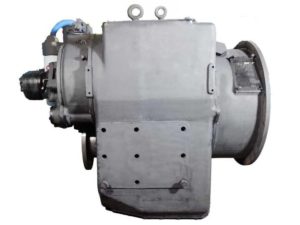
Recognizing and managing hazards is crucial when servicing the MG-540 transmission, especially aboard moving vessels or confined engine rooms. This section outlines the mechanical, thermal, hydraulic, and electrical risks that technicians may encounter.
Mechanical Hazards
- Rotating Components: Always wait for full engine shutdown and shaft deceleration before attempting any work.
- Pinch Points: Present in clutch packs, gear meshes, and bearing carriers. Use tools, not fingers, to align parts during assembly.
- Sharp Surfaces: Machined edges, fractured gaskets, and broken seals can cause lacerations.
Hydraulic Hazards
- High-Pressure Oil Circuits: The MG-540 uses hydraulic pressure (up to 265 psi) to actuate clutches. Leaking lines or fittings may cause fluid injection injuries.
- Hot Oil Spray: Ensure hoses and fittings are secure before running the engine. Always relieve pressure before disconnecting lines.
Thermal Hazards
- Overheated Oil: Normal operating temperatures reach up to 180°F, with a maximum of 200°F. Touching hot lines or housings can cause burns.
- Heated Components: During reassembly, heated bearings and gears are common. Always use thermal gloves and lifting tools.
Electrical Hazards
- Solenoid Activation: The EC050 electronic control system can energize solenoids unexpectedly. Disconnect power before servicing any electrical control component.
- Backdriving Events: If the shaft is turning due to water flow (sailing, towing, or heavy currents), it may activate sensors or systems unexpectedly.
Environmental Hazards
- Slips and Falls: Oil leaks or cleaning agents can cause slippery decks. Place absorbent mats around the work area.
- Confined Space Risks: Engine rooms may lack ventilation. Use portable fans or PPE-approved respirators when using solvents.
Mitigation begins with a walkaround inspection, using a hazard checklist, and isolating risk zones with tape or signage where needed.
Safe Handling of Heated or Frozen Components (Bearings, Seals) For Twin Disc MG-540 Marine Gear
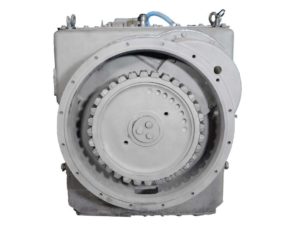
Some service procedures for the MG-540 require the use of temperature differential installation methods, where components are heated or frozen to achieve proper interference fits. Failure to follow proper safety and handling practices during these steps can result in personal injury or damage to expensive components.
Heated Components
Bearings, races, and gears are often heated to 250°F (120°C) in an oven for 30 minutes prior to installation.
Handling Tips:
- Always use heat-resistant gloves
- Use tongs or a mechanical bearing installer
- Avoid setting hot parts directly on surfaces that can transfer heat back rapidly, which could cause distortion
- Never exceed the recommended heat level—excess heat will degrade bearing metallurgy
Frozen Components
Some bearing cups, rollers, and races should be placed in a deep freezer or dry ice bath for at least two hours before installation. This causes them to contract and fit easily into housings.
Handling Tips:
- Use cold-insulated gloves to avoid frostbite
- Never touch cryogenic parts with bare skin
- Ensure condensation does not create slippage—wipe with a clean cloth before pressing components into place
Hazards and Mitigation:
| Component | Hazard | Mitigation |
| Heated Bearings | Burns | Use temperature-rated gloves and tongs |
| Frozen Races | Frostbite | Use freezer gloves and limit exposure |
| Assembly with Hot/Cold Mix | Thermal shock to parts | Let components stabilize before use |
| Oven/Freezer Environment | Fire or explosion (flammables) | Ensure work area is free of flammable vapors |
Proper PPE and prep protocols not only ensure safety but also prevent damage to precision-fit transmission components.
Lockout/Tagout and Mechanical Safety Protocols For Twin Disc MG-540 Marine Gear
Mechanical and electrical isolation is essential before beginning any service on the MG-540 marine gear. This includes the prevention of accidental engine starts, hydraulic movement, or propeller rotation. The best practice is to implement a Lockout/Tagout (LOTO) procedure.
Basic Lockout/Tagout Procedure
- Engine Shutdown
- Turn off ignition
- Remove the key
- Disconnect the negative terminal from the battery
- Hydraulic Pressure Relief
- Depressurize the hydraulic system by actuating the manual override on valves (if equipped) or using bleed screws
- Confirm zero psi on both forward and reverse gauge ports
- Tag the Control System
- Place warning tags on throttle, transmission control, and main electrical panel stating “Under Maintenance – Do Not Operate”
- Place warning tags on throttle, transmission control, and main electrical panel stating “Under Maintenance – Do Not Operate”
- Propeller Shaft Locking
- Shift to NEUTRAL disengages the clutches but does not lock the shaft
- Use a mechanical shaft brake or a shaft-locking pin if the vessel is in water, under tow, or docked in strong currents.
- Electrical Lockout
- Disconnect all connections to EC050 or electrical control valves
- Store connectors away from metal surfaces or fuel lines to prevent arcing
Safety Warnings From the OEM Manual
- “The NEUTRAL position disengages transmission clutches but does not prevent propeller rotation. A shaft brake must be used.”
- “To prevent accidental starting of the engine when performing maintenance, disconnect battery cables and remove ignition key.”
- “Never use lifting points on the transmission to lift the entire engine and gear package.”
Additional Protocols for Safe Mechanical Work
- Use OEM-designed lifting bolts only for the transmission unit—never for the engine-transmission assembly
- Ensure lifting eyebolts are seated with full thread engagement and never bottom out
- When disassembling clutch groups, always use a spring compressor (e.g., T-16240-3) to relieve stored mechanical energy
- Block all rotating assemblies before removing bearings, shafts, or gears
- Use jack stands or certified supports when working beneath suspended components
Summary: Safety Is Non-Negotiable
| Safety Category | Action Required |
| PPE | Eye, hand, foot, hearing, and oil-resistant clothing |
| Hazard Control | Identify and label mechanical, thermal, hydraulic, and electrical risks |
| Heated/Frozen Parts | Use ovens and freezers correctly; wear protective gear |
| Lockout/Tagout | Full engine shutdown, electrical disconnection, shaft locking |
| Tools and Lifting | Use certified tools; never lift entire engine/transmission from MG-540 lift points |
In all cases, technicians should maintain a culture of discipline, double-check their safety systems, and follow a checklist before beginning work. The Twin Disc MG-540 is a powerful, high-performance marine transmission, and it deserves an equally rigorous safety approach during every maintenance cycle. Let this guide be your safety blueprint as you work on maintaining uptime and protecting crew lives.
Videos About Twin Disc Transmissions
6 Reasons Your Twin Disc Transmission Has Low Oil Pressure
7 Reasons Your Twin Disc Transmission Is Overheating
3 Reasons Your Clutch Plates in Your Twin Disc Transmission Are Making Excessive Noise
Bull Gear On A Twin Disc Transmission
Rebuilt Twin Disc Transmissions