


 Free US Calls: 1-888-433-4735
 International: 305-545-5588
Reusability of Head Bolts for Cummins KTA19 Engines: What Mechanics and Fleet Operators Need to Know
The Cummins KTA19 is a heavy-duty, high-horsepower diesel engine widely used in marine propulsion, power generation, mining, and industrial applications. Designed for continuous operation under extreme load, the KTA19 relies on precise cylinder head clamping force to maintain combustion integrity, coolant sealing, and long-term reliability. One of the most common questions during a KTA19 rebuild or top-end service is:
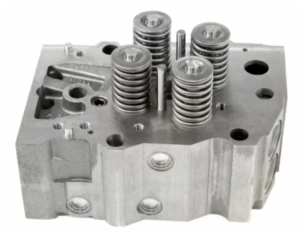
Cylinder Head and Related Components for Cummins KTA19
Can Cummins KTA19 head bolts be reused, or should they be replaced?
The answer depends on bolt type, condition, service history, and inspection results. This article breaks down how KTA19 head bolts work, when reuse is acceptable, when replacement is required, and best practices to ensure a reliable rebuild.
Understanding the Role of Head Bolts in the KTA19
Head bolts on the Cummins KTA19 are responsible for clamping the cylinder head to the engine block with enough force to:
-
Seal combustion pressures exceeding thousands of PSI
-
Prevent coolant and oil leakage between block and head
-
Maintain consistent liner protrusion and head gasket compression
-
Handle repeated thermal expansion and contraction
Unlike smaller engines, the KTA19 uses large-diameter, high-strength head bolts engineered for heavy-duty service. Proper bolt performance is critical—head bolt failure can result in blown head gaskets, cracked heads, liner movement, or catastrophic engine damage.
Cylinder Head and Related Components for Cummins KTA19
Are Cummins KTA19 Head Bolts Torque-to-Yield?
One of the most important factors in determining reusability is whether the engine uses torque-to-yield (TTY) bolts.
KTA19 Head Bolt Design
-
Cummins KTA19 engines do NOT use torque-to-yield head bolts
-
They use high-strength, reusable head bolts
-
Bolts are torqued in stages to a specified final torque value, not stretched past yield
This is a key distinction. In many modern automotive engines, TTY bolts are designed for one-time use only. The KTA19, however, was engineered for serviceability and rebuildability, especially in industrial and marine environments.
When KTA19 Head Bolts Can Be Reused
Cummins allows reuse of KTA19 head bolts provided they meet specific inspection criteria. Reuse is common in professional rebuilds when bolts are in good condition and within specification.
Head bolts may be reused if:
1. Bolts Are Within Length Specification
-
Each bolt must be measured against Cummins maximum allowable length
-
Stretch beyond specification indicates permanent deformation
-
Any bolt exceeding length limits must be replaced
2. Threads Are Undamaged
-
No galling, stripping, or deformation
-
Threads must engage smoothly by hand
-
Minor surface discoloration is acceptable; thread damage is not
3. Bolt Shank Is Straight and Uniform
-
No visible necking or narrowing of the shank
-
No bending or distortion
-
Uniform diameter along the length
4. Bolt Head and Washer Face Are Intact
-
No rounding of bolt head
-
No cracks or surface fractures
-
Washer face must be flat and smooth to ensure even clamping force
When these conditions are met, reuse is generally acceptable and commonly practiced.
When KTA19 Head Bolts Should Not Be Reused
Despite being reusable by design, there are many situations where replacing head bolts is the safer and more economical decision in the long run.
Head bolts should be replaced if:
1. The Engine Experienced Overheating
Severe overheating can:
-
Alter bolt metallurgy
-
Reduce clamping force retention
-
Cause uneven expansion and stress
Any KTA19 that suffered head gasket failure due to overheating should be treated with caution when considering bolt reuse.
2. Corrosion Is Present
Marine and offshore environments are especially hard on fasteners. Replace bolts if you see:
-
Pitting corrosion
-
Rust in the shank or threads
-
Coolant contamination damage
Corrosion compromises bolt strength and torque accuracy.
3. Bolt Length Exceeds Specification
Even slight over-stretch makes a bolt unreliable. Once a bolt has permanently stretched, it cannot provide consistent clamping force again.
4. Uncertain Service History
If you don’t know:
-
How many times the bolts have been reused
-
Whether proper torque procedures were followed
-
If overheating or detonation occurred
Replacement is the safer option.
Measuring Head Bolts Correctly
Before deciding to reuse KTA19 head bolts, proper inspection is essential.
Recommended Inspection Steps
-
Clean bolts thoroughly (no oil, carbon, or corrosion)
-
Measure overall bolt length using a calibrated micrometer or vernier caliper
-
Compare measurements to Cummins service manual specifications
-
Inspect threads visually and by running a thread gauge or nut
-
Check for straightness by rolling on a flat surface
Any bolt that fails any inspection step should be discarded.
Torque Accuracy and Reused Bolts
Even when bolts pass inspection, torque accuracy becomes more critical with reused fasteners.
Best practices include:
-
Lightly oiling threads and under-head contact surfaces (per Cummins spec)
-
Using a calibrated torque wrench
-
Following the exact torque sequence and stages
-
Allowing proper settling time between torque stages if specified
Failure to follow proper torque procedures often causes more head gasket failures than bolt reuse itself.
Head Bolts vs. Stud Conversions
Some rebuilders consider converting KTA19 engines to head studs. While studs offer advantages in certain racing or extreme-duty applications, Cummins engineered the KTA19 to operate reliably with factory head bolts when installed correctly.
For most marine, industrial, and generator applications:
-
OEM-style head bolts are sufficient
-
Stud conversions are not required
-
Proper surface prep and torque procedure matter more than fastener type
Cost vs. Risk: Reuse or Replace?
From a purely economic standpoint:
-
Reusing good bolts can save money on large engines like the KTA19
-
Replacing bolts adds cost but reduces risk
In high-consequence environments (offshore vessels, continuous-duty generators, remote mining sites), many operators choose replacement for peace of mind—even if reuse is technically acceptable.
Best Practice Recommendation
Cummins KTA19 head bolts are reusable by design, but reuse should never be automatic.
Reuse only if:
-
Bolts pass length and condition inspection
-
Engine did not experience severe overheating
-
Service history is known and controlled
Replace bolts if:
-
There is any doubt about condition or history
-
The engine operates in critical or remote service
-
Corrosion or stretch is present
The cost of new bolts is minimal compared to the cost of head gasket failure, liner damage, or unplanned downtime.
Final Thoughts
The Cummins KTA19 is built for longevity, rebuildability, and heavy-duty service—and its head bolt design reflects that philosophy. While reuse is permitted and common, it must be approached with discipline, measurement, and sound judgment.
In high-output, continuous-duty engines like the KTA19, clamping force is everything. Whether you choose to reuse or replace head bolts, proper inspection, preparation, and torque procedures will ultimately determine the success of your rebuild.
Cylinder Head and Related Components for Cummins KTA19