


 Free US Calls: 1-888-433-4735
 International: 305-545-5588
This short video shows you how to verify if this turbo is the one you need to replace your old turbo. Please check your old turbo to be sure that you have the correct compressor housing ratio and turbine housing ratio as shown here. The compressor housing ratio for this turbo is 0.75 and the turbine housing ratio is 1.03.
Selecting the Right Turbo for Detroit Diesel Marine Aftercooled Engines (6-71, 12V71, 6V92, 8V92, 12V92, 16V92)
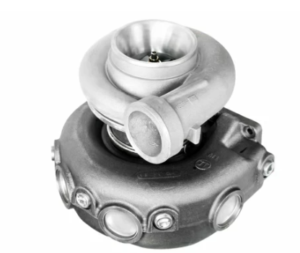
Turbocharger for Detroit Diesel Aftercooled Engines (Series 71 & 92) Rebuilt
When maintaining or upgrading a Detroit Diesel marine engine, selecting the correct turbocharger is one of the most important performance decisions you’ll make. Whether you’re working with a 6-71TI, 12V71TA, 6V92TA, or even a 16V92TA, the turbocharger’s design — particularly its compressor and turbine housing ratios — directly affects how your engine breathes, accelerates, and maintains power under load.
In our short video, we highlight one of the key specifications you’ll see on a Detroit Diesel turbo:
-
Compressor housing ratio: 0.75
-
Turbine housing ratio: 1.03
While these numbers might seem technical, understanding what they mean will help you select the right turbo for your Detroit Diesel marine aftercooled engine — ensuring the perfect balance of boost, efficiency, and reliability.
What the Turbo’s Housing Ratios Actually Mean
Every turbocharger is built around two main sections — the compressor housing (cold side) and the turbine housing(hot side). The size and shape of these housings determine how the turbo behaves.
Compressor Housing Ratio (0.75 A/R)
The compressor housing draws in and compresses air before sending it into the engine’s intake. Its ratio (A/R, short for “Area over Radius”) describes how efficiently air moves through this side of the turbo.
-
A smaller ratio (like 0.60) spools up faster, giving quick low-end boost but potentially limiting top-end airflow.
-
A larger ratio (like 0.75) allows more airflow at higher engine speeds, improving sustained power at cruising RPM.
For Detroit Diesel marine engines, which spend most of their time at steady loads rather than quick throttle changes, the 0.75 compressor housing offers the ideal balance — fast enough spool-up to prevent lag, yet open enough to maintain strong airflow under continuous operation.
In practical terms:
-
Your Detroit Diesel 8V92TA or 12V71TA can maintain smoother boost across a wide RPM range.
-
Exhaust smoke is reduced because the turbo reaches boost earlier and keeps airflow consistent.
-
Engine temperatures stay stable during long hours at cruising RPM.
Turbine Housing Ratio (1.03 A/R)
The turbine housing directs exhaust gas through the turbine wheel, which spins the compressor. Its ratio determines how quickly the turbo reacts to exhaust flow and how much backpressure is created.
-
A smaller ratio (like 0.84) produces faster spool-up but more backpressure and higher exhaust temperatures.
-
A larger ratio (like 1.03) allows greater exhaust flow, lowering backpressure and improving top-end efficiency.
A 1.03 turbine ratio is ideal for marine applications because it prioritizes exhaust flow efficiency and temperature control. Marine engines such as the 6V92TA or 12V92TA operate for long durations under heavy load — often 80–90% throttle. With a larger turbine housing, these engines maintain cooler exhaust temperatures and prevent premature turbo wear or failure due to excessive heat.
Why These Ratios Are Perfect for Detroit Diesel Marine Aftercooled Engines
The combination of 0.75 (compressor) and 1.03 (turbine) creates a balance that matches the operating profile of Detroit Diesel marine engines perfectly. Here’s why:
-
Optimized Airflow for Two-Stroke Efficiency
Detroit Diesel two-stroke engines depend heavily on the blower and turbocharger combination for scavenging air and maintaining positive manifold pressure. A properly matched turbo with these ratios complements the blower’s airflow curve without overspeeding the turbo or causing boost surges.
-
Ideal for Continuous RPM Operation
Unlike automotive engines that rev up and down constantly, marine engines run for hours at a fixed RPM. The 1.03 turbine housing keeps exhaust temperatures stable and prevents thermal overload during long hauls or towing conditions.
-
Improved Turbo Longevity
By preventing excessive backpressure, the 1.03 housing helps extend turbine bearing life. This is critical for vessels that rely on Detroit Diesel 6V92TA, 8V92TA, or 12V71TA engines operating under constant marine load conditions.
-
Balanced Boost Pressure Across Cylinders
Especially in multi-cylinder setups like the 12V71TA or 16V92TA, consistent turbo behavior across both banks ensures even airflow and fuel burn, reducing the chance of uneven cylinder temperatures or detonation.
How to Choose the Correct Turbo for Your Detroit Diesel Engine
If you’re selecting or replacing a turbo for your Detroit Diesel marine engine, here are the steps to ensure a perfect match:
-
Identify your engine model and setup – Confirm whether it’s turbo-only (T) or turbo-aftercooled (TA).
-
Determine your desired performance – A vessel that prioritizes endurance and temperature control should stay close to the 1.03 turbine ratio.
-
Match your existing manifold and flange setup – Detroit Diesel turbos use specific flange types and oil connections; check compatibility with your blower and exhaust elbow.
-
Inspect boost range – Ensure the turbo supports the factory-rated boost (usually 18–22 PSI for most TA models).
-
Consult experts – Diesel Pro Power’s specialists can guide you to the correct turbo using your engine’s CPL number or serial configuration.
Why Buy Your Turbocharger from Diesel Pro Power
With over 40,000 satisfied customers worldwide, Diesel Pro Power has built its reputation as the leading online supplier of Detroit Diesel marine parts. When you purchase a turbo from Diesel Pro Power, you’re getting more than just a replacement — you’re getting a component that’s tested, balanced, and matched to OEM performance standards.
Our Detroit Diesel turbochargers are:
-
Built to OEM specifications with properly calibrated compressor and turbine housings.
-
Balanced and tested to ensure consistent boost performance.
-
Ready for installation, including oil feed and drain connections for Detroit Diesel 6-71, 12V71, 6V92, 8V92, 12V92, and 16V92 engines.
-
Supported by our expert team who can help you verify compatibility before purchase.
-
Available for fast shipping to over 180 countries, ensuring minimal downtime for commercial or private marine operators.
Every turbo we supply is designed to maintain factory performance while improving durability and thermal balance — giving your Detroit Diesel the boost it was built to handle.
-
-
-