


 Free US Calls: 1-888-433-4735
 International: 305-545-5588


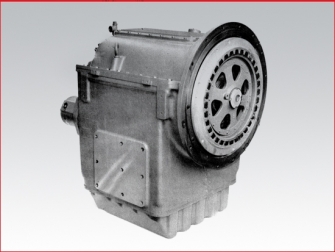
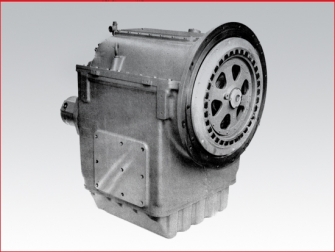
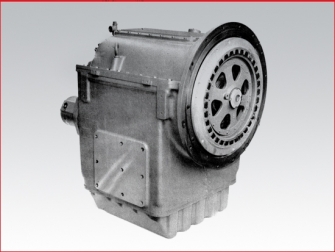
Twin Disc MG 527 Marine Transmission Parts - Rebuilt MG527 Gear Section
 Loading...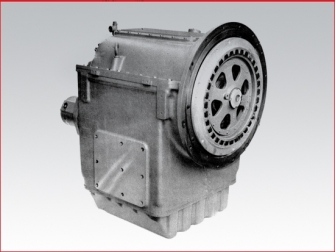


Twin Disc MG527 Marine Transmission — Rebuilt MG527 Gear Section (Ratios, Fitment & Selection Guide)
When the job demands repeatable torque, smooth shifts, and long service life, the Twin Disc MG527 earns its place in commercial fleets. This section focuses on rebuilt MG527 marine gears offered in the most-requested ratios—2.00:1, 3.00:1, 4.00:1, and 5.00:1—and gives you practical guidance to choose the configuration that best matches your hull, propeller, and operating profile. Each unit is professionally rebuilt and spin tested prior to shipment and is sold with a refundable core deposit.
MG527 Ratio Lineup (Quick View)
-
Twin Disc MG527, 2.00:1 — Rebuilt
-
Twin Disc MG527, 3.00:1 — Rebuilt
-
Twin Disc MG527, 4.00:1 — Rebuilt
-
Twin Disc MG527, 5.00:1 — Rebuilt
All rebuilt MG527 transmissions in this section are spin tested for engagement quality and shift smoothness. A refundable core deposit applies; see the Core Return section below.
Why Operators Choose the MG527
The MG527 is a purpose-built marine gearbox engineered for high-duty work cycles. In day-to-day terms, that means it tolerates long hours, frequent maneuvering, and the kind of stop-and-go loads that punish lesser gears. Typical adopters include:
-
Commercial fishing vessels that need controlled low-speed authority for hauling and setting gear.
-
Crew boats and pilot boats with mixed profiles—harbor maneuvering followed by higher-speed transits.
-
Utility craft and patrol boats that prioritize crisp engagement and predictable throttle response.
-
Tugs and push boats in rivers and harbors where bollard pull and slow-wheel control matter more than top-end speed.
What sets the MG527 apart is the combination of robust clutch packs, a serviceable gear train, and accessory flexibility (such as PTO and, depending on the build, trolling valve compatibility) so you can tailor the driveline to your mission.
Selecting the Right Ratio for Your Hull & Mission
Choosing ratio is about aligning the engine’s power curve to the propeller load and the job you do most often. Use the scenarios below to zero in on the best match.
2.00:1 — Emphasis on Transit Speed and Responsive Throttle
If your vessel spends a larger portion of the day moving between locations and you favor higher cruise speeds with plenty of throttle response, 2.00:1 is a proven choice. It often pairs with medium-diameter props where aperture limits restrict maximum wheel size.
Best for
-
Light-to-moderate displacement hulls that operate on plane or at brisk semi-displacement speeds.
-
Crew and pilot boats prioritizing schedule-keeping and quick acceleration.
-
Patrol craft balancing harbor maneuvering with extended transits.
Considerations
-
Less torque multiplication at the prop compared with deeper ratios.
-
For frequent towing or persistent push work, consider 3.00:1 or deeper.
3.00:1 — Balanced “Do-Most” Ratio
3.00:1 strikes a middle ground, offering meaningful torque multiplication for work tasks while maintaining reasonable transit rpm at the wheel. This ratio suits operators who divide their time between harbor maneuvers, gear work, and coastal runs.
Best for
-
Medium displacement hulls with mixed duty cycles.
-
Operators who want one setup that “does most things well” across changing missions.
-
Situations where prop diameter can increase modestly without aperture conflicts.
Considerations
-
Won’t deliver the maximum bollard pull that deeper ratios can provide.
-
Prop selection remains important to avoid under- or over-loading the engine.
4.00:1 — Controlled Low-Speed Authority
When precise handling, station keeping, and bollard pull are priorities, 4.00:1 steps forward. The deeper reduction supports larger-diameter props turning slower, improving bite and reducing cavitation risk under load.
Best for
-
Trawlers, workboats, and harbor craft operating in confined waterways or currents.
-
Slow-speed tasks: docking, gear hauling, survey, dredge support, or push operations.
-
Operators targeting lower prop rpm for noise and vibration reduction at idle and maneuvering speeds.
Considerations
-
Lower potential top speed relative to shallow ratios; plan transits accordingly.
-
Ensure your propeller shop matches diameter, pitch, and blade area to the deeper reduction.
5.00:1 — Maximum Torque Multiplication
For the heaviest work at the slowest wheel speeds, 5.00:1 provides the greatest torque multiplication of the four catalog ratios. It’s the go-to for high bollard pull emphasis, persistent towing, and currents that demand muscle more than miles per hour.
Best for
-
Dedicated towing and pushing operations in rivers and harbors.
-
Large-diameter props where maintaining cavitation margin is critical.
-
Duty cycles that benefit from reduced engine rpm for longevity and fuel discipline.
Considerations
-
Transit speeds are lower; mission planning should reflect the emphasis on pull and control.
-
Close coordination with your propeller shop is essential for proper loading at rated rpm.
Rotation, Case Style & Build Details That Matter
Beyond ratio, the correct MG527 for your vessel depends on rotation, case configuration, mounting, and accessory provisions. Having these details ready ensures a smooth order and an easier installation.
Confirm Input/Output Rotation
-
Determine engine rotation at the flywheel and the desired prop rotation.
-
Confirm that the MG527 build will produce the correct ahead and astern shaft directions for your installation.
Case & Footprint
-
Case style (e.g., straight vs. down-angle) must align with shaft line geometry and stringer height.
-
Verify mount locations and bolt patterns to match existing beds or planned foundations.
Cooling & Filtration
-
Gear oil cooling capacity should match the duty cycle.
-
Plan for appropriate heat exchanger or oil-to-water cooler sizing and clean raw-water flow paths.
Controls & Interfaces
-
Mechanical or electronic control compatibility influences shift feel and reliability.
-
Validate throw lengths, detent requirements, and any electronic calibration needs.
PTOs and Trolling Valves (If Applicable)
-
If your application requires auxiliary hydraulics, confirm PTO provision and drive details.
-
For fine low-speed control (trawling, survey), determine whether a trolling valve is appropriate for your MG527 build and mission.
Propeller Pairing: Practical Rules of Thumb
Your ratio choice and propeller specification must work together. Keep these principles in mind:
-
Deeper ratios favor bigger wheels: As reduction increases, you can swing larger diameter or increase blade area, improving thrust and low-speed authority.
-
Mind cavitation margins: Lower prop rpm per engine rpm helps minimize cavitation under heavy load or in aerated water.
-
Hit rated rpm: With a clean bottom, your engine should reach rated rpm at WOT; adjust pitch/diameter to avoid over- or under-loading.
-
Twin-engine symmetry: Match ratio, rotation, and prop spec port and starboard for balanced handling and loading.
Rebuilt MG527: What You Can Expect
A rebuilt MG527 is a smart way to curb downtime and control project costs without compromising on performance.
-
Spin tested prior to shipment for engagement quality and smooth operation.
-
Externally inspected for port threads, mounting faces, and housing integrity.
-
Prepared for freight with secure palletization and ship plugs installed.
-
Supported by humans—guidance on ratio/rotation is available before you place your order.
Need a non-standard configuration? Share photos of your current gear’s ID plate, mounts, coupling, and cooler. A few images go a long way toward ensuring the replacement build aligns with your existing setup.
Core Return & Exchange (How the Refund Works)
All MG527 units in this section are sold with a refundable core deposit. The program keeps quality housings and internals in circulation and helps the entire workboat community maintain older fleets.
-
Purchase a rebuilt MG527 — The core deposit is collected at checkout.
-
Install the replacement — Get your vessel back on schedule.
-
Return the core — Ship your like-for-like MG527 core on a secure pallet. Help with freight is available.
-
Evaluation — Cores are inspected for rebuildability (e.g., intact case, no fire/flood damage, reasonable completeness).
-
Refund — Qualifying cores trigger the core deposit refund promptly after inspection.
Not sure if your core qualifies? Send photos of the exterior, input/output ends, and any visible casting damage for a quick assessment before you book freight.
Operating Profiles: Match the Gear to the Job
Commercial Fishing (Trawlers, Longliners, Pots)
-
4.00:1 or 5.00:1 often deliver the slow-wheel control needed for setting, hauling, and station keeping.
-
Larger diameter props reduce cavitation when working in cross-current and prop wash.
Harbor Service & Utility Work
-
3.00:1 offers a practical balance: tug-assist maneuvers one hour, short transits the next.
-
Consider trolling capability if you regularly hold position near structures.
Crew & Pilot Boats
-
2.00:1 pairs with responsive prop rpm for schedule-driven operations.
-
If you also perform push or tow work, evaluate a move to 3.00:1 with prop changes.
Patrol & Government Craft
-
2.00:1 or 3.00:1 depending on whether sprint or mixed patrol dominates the profile.
-
Prioritize control interface compatibility for seamless transition between idle maneuvers and pursuit speeds.
High-Level Commissioning Considerations (No Step-by-Step)
-
Alignment: Verify alignment hot and cold if your yard’s procedures allow; mount condition affects vibration and seal life.
-
Oil & Cooling: Use the specified oil type and maintain clean, unrestricted cooling flow to protect clutch packs.
-
Controls: Confirm full throw and neutral detent; recalibrate electronic controls where applicable.
-
Sea Trial Data: Record oil temps, engine rpm at cruise/WOT, and engagement feel. Small adjustments early pay long-term dividends.
(These are planning notes, not installation instructions.)
Maintenance Priorities for Long Gear Life
-
Scheduled oil and filter service—heat and contamination are clutch enemies.
-
Cooler hygiene—scale and debris limit heat rejection; keep raw-water and oil sides clean.
-
Control linkage condition—stretched cables, sticky linkages, or corroded connectors degrade shift quality.
-
Mount integrity—oil-soaked or collapsed mounts change alignment and raise vibration levels.
-
Oil sampling—periodic analysis can reveal bearing wear or clutch material before symptoms become operational downtime.
Troubleshooting by Symptom (When Replacement Makes Sense)
-
Slip under load with correct oil and linkage → clutch wear or pressure control concerns.
-
Harsh engagement or chatter even after control verification → clutch or hydraulic issues.
-
Metallic debris in oil beyond normal break-in → gear train or bearing distress.
-
Overheating oil with a verified cooler → internal friction, slipping, or insufficient flow.
-
Load-dependent whine/rumble → bearing load path or gear mesh problem.
When two or more of these symptoms converge—and downtime costs are rising—moving to a rebuilt, spin-tested MG527 is often the most efficient path back to reliable service.
Ordering & Sizing Checklist
Before you finalize a selection, gather the essentials below. If anything is unknown, photos and quick measurements usually fill the gaps:
-
Engine make/model and rated rpm
-
Preferred ratio (2.00, 3.00, 4.00, or 5.00:1)
-
Input/output rotation and desired prop rotation ahead/astern
-
Case style and mounting footprint (bolt pattern, stringer spacing)
-
PTO or trolling valve requirements (if applicable to your mission)
-
Coupling interface (flywheel data, spline/bolt pattern, drive plate details)
-
Cooling arrangement and available cooler capacity
-
Any space constraints near the bellhousing or shaft line
Providing this information up front allows us to confirm compatibility and recommend any supporting parts—mounts, couplings, filters, or coolers—to streamline the change-out.
Frequently Asked Questions
Can I change ratios when replacing an existing MG527?
Yes. Treat the change as a small refit: work with your propeller shop to adjust diameter/pitch/blade area so the engine still reaches rated rpm with a clean bottom. Consider how the new ratio affects your typical transit speeds and low-speed control.
What if I need precise low-speed maneuvering for survey or trawling?
Confirm whether your build supports a trolling valve and whether your control system can interface properly. For many low-speed tasks, a deeper ratio (4.00:1 or 5.00:1) plus suitable prop spec already yields excellent control.
How do PTO needs affect my choice?
If you power hydraulics from the gearbox, specify PTO requirements during selection. Shaft size, engagement method, and duty cycle determine whether the MG527 build should include a specific PTO provision.
What documentation is useful for confirming a match?
Photos of the current gear’s ID plate, mounts, cooler, and coupling plus notes on engine model and rated rpm. These details speed up verification and help avoid surprises during installation.
Is a rebuilt unit a compromise on reliability?
A professionally rebuilt and spin-tested MG527 is an effective way to control timelines and cost while maintaining operational reliability. The key is proper matching to the application and disciplined maintenance thereafter.
Why Choose Diesel Pro Power for Your Rebuilt MG527
-
Purpose-built catalog focused on working marine gears so you can quickly find the MG527 ratio you need.
-
Spin-tested assurance on every rebuilt unit for engagement quality and smooth operation.
-
Straightforward core program with practical guidance on qualifying returns and freight preparation.
-
Application support from a team that works daily with captains, shipyards, and naval architects.
-
Long-term parts ecosystem—from seals and filters to coolers and couplings—so support continues after the sale.


